Having a garden that’s fully or partially forested is a wondrous thing. Not only does a woodland garden offer amazing interest throughout the year, the place is most likely an oasis for wildlife and native plants. Yes, you could leave it untouched save for maybe a winding footpath running through it. But then again, why not add some simple, subtle touches that can make your woodland garden all the greater.
Here are 9 ideas for jazzing up a woodland garden.
1. Pick a ‘hero’ tree
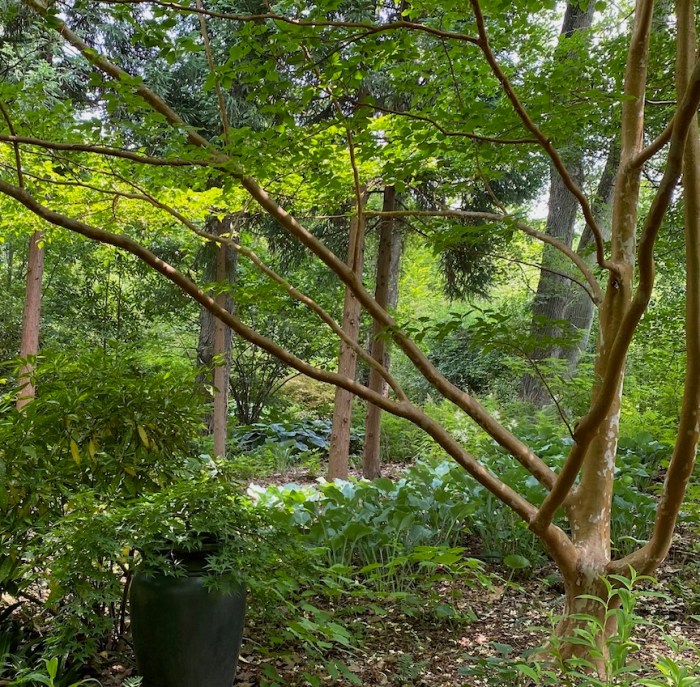
An oddly sculptural tree enchants strollers in the woodland section of Chanticleer in Pennsylvania.
In a large wooded garden, there’s often a tree or large shrub that looks a bit wonky. Woodlands are pretty wild, after all, so plants have to do whatever they can to reach for the sun. With some light, mindful pruning to enhance the shape, that tree can go from weird to wonderful, acting as a living, eye-catching sculpture. Clearing some of the undergrowth and/or adding low-growing ground cover helps throw that specimen into high relief.
2. Load up on texture
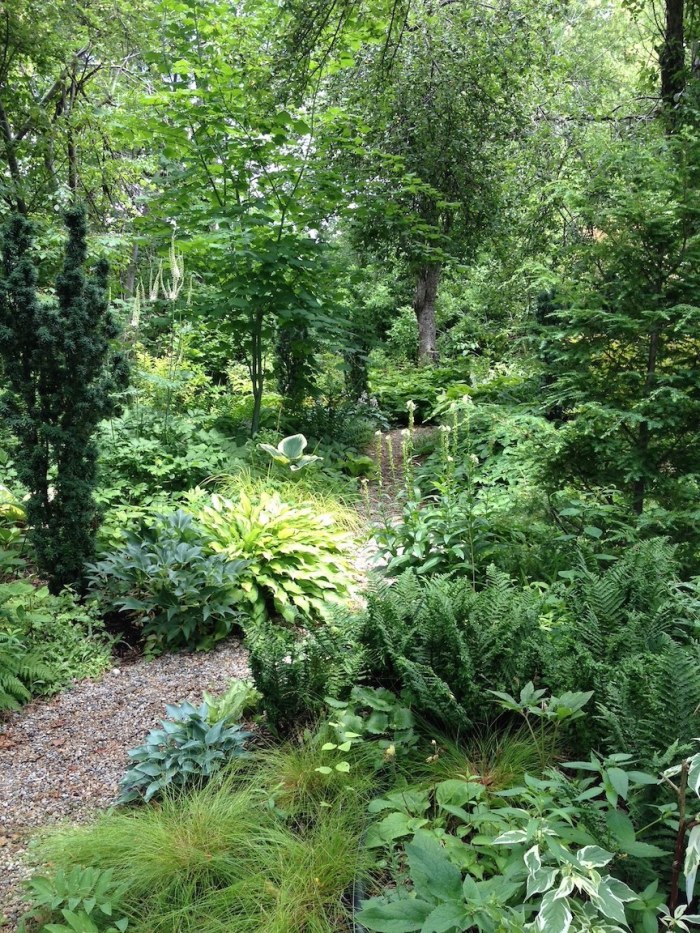
Textures everywhere in the show garden of a nursery (now permanently closed) in Acton, Ontario.
Shade loving perennials like Rodgersia, hostas, and ferns line the path in this woodland garden with oodles of easy-to-see, easily accessible texture. The ornamental grass, seen in the foreground, is possibly Appalachian Sedge (Carex appalachica), a low-growing, clump-forming, finely textured perennial that also happens to be native to southeastern Canada and the northeastern U.S.A. and loves partial to full shade.
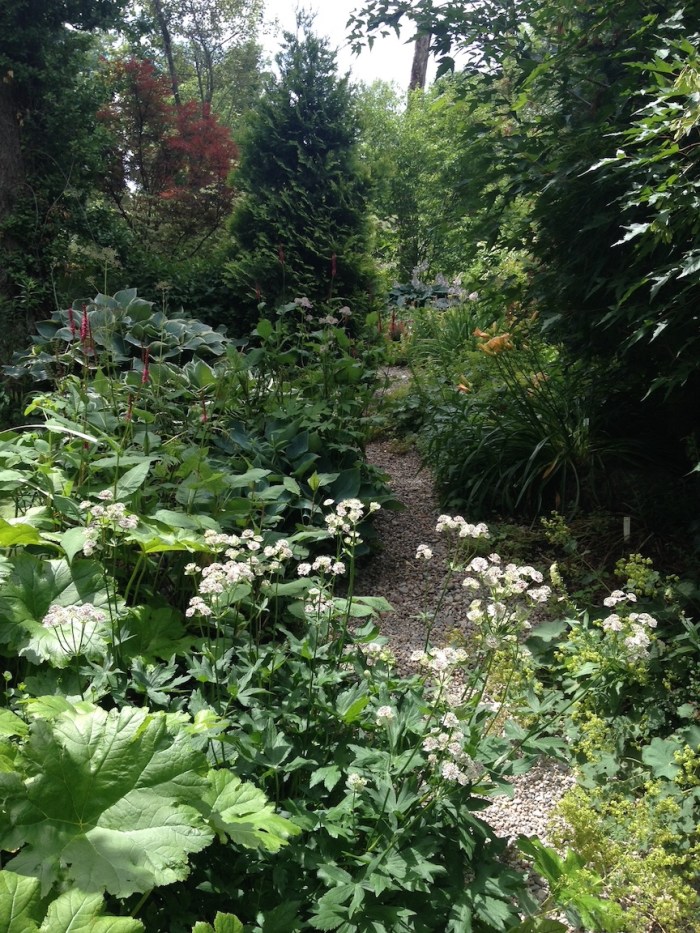
Another view of the woodland show garden no longer open to the public in Acton, Ontario.
3. Beckon with soft paths


Left: A bark mulched path. Right: A moss-covered path. Both gardens are in south central Ontario.
There’s something about a woodland garden that calls out for paths that are soft and curving. The use of hard materials and straight lines–no matter how practical–just don’t seem right.
The garden shown at left has a substantial portion of property left as true wild woodland, untouched except for a wide path finished with bark mulch (see more of this wooded garden and its path in Idea #9).
The woodland garden featured in the photo above right has a series of pathways that, wherever possible, is covered in a fine carpet of moss. Growing moss is not easy but, as it’s probably the most evocatively “forest” of plants, it’s a great addition to a woodland-themed garden. A low traffic pathway is a good choice because, being a cleared, flat surface, it can make growing moss a little easier.
4. Bring in eye-catching colour

Tuff Stuff Ah-Ha® Mountain Hydrangea (Hydrangea serrata) from Proven Winners.
When you conjure up a mental image of a woodland garden, you’re probably thinking of a space stuffed with green on green on green. But a wooded spot can have its colourful accents, too. Take Tuff Stuff Mountain Hydrangeas (shown above, shot at a friend’s garden in Gananoque, Ontario), a wonderful option because they give so much. They are a remarkable re-bloomer sprouting fresh flowers in a gorgeous mauve-pink from early summer through to frost and the lovely quilted leaves turn a bronze-y red in the fall.
Ephemeral spring blooming flowers are another option for adding colour to a full shade garden. My personal fave is Snakeshead fritillary. I can’t get enough of those fascinating deep purple and cream checkered (!!!!) petals.

Snakeshead fritillary (Fritillaria meleagris) are right at home in a woodland garden. Shot at Chanticleer, Pennsylvania, USA.
5. Discover new plant ‘containers’
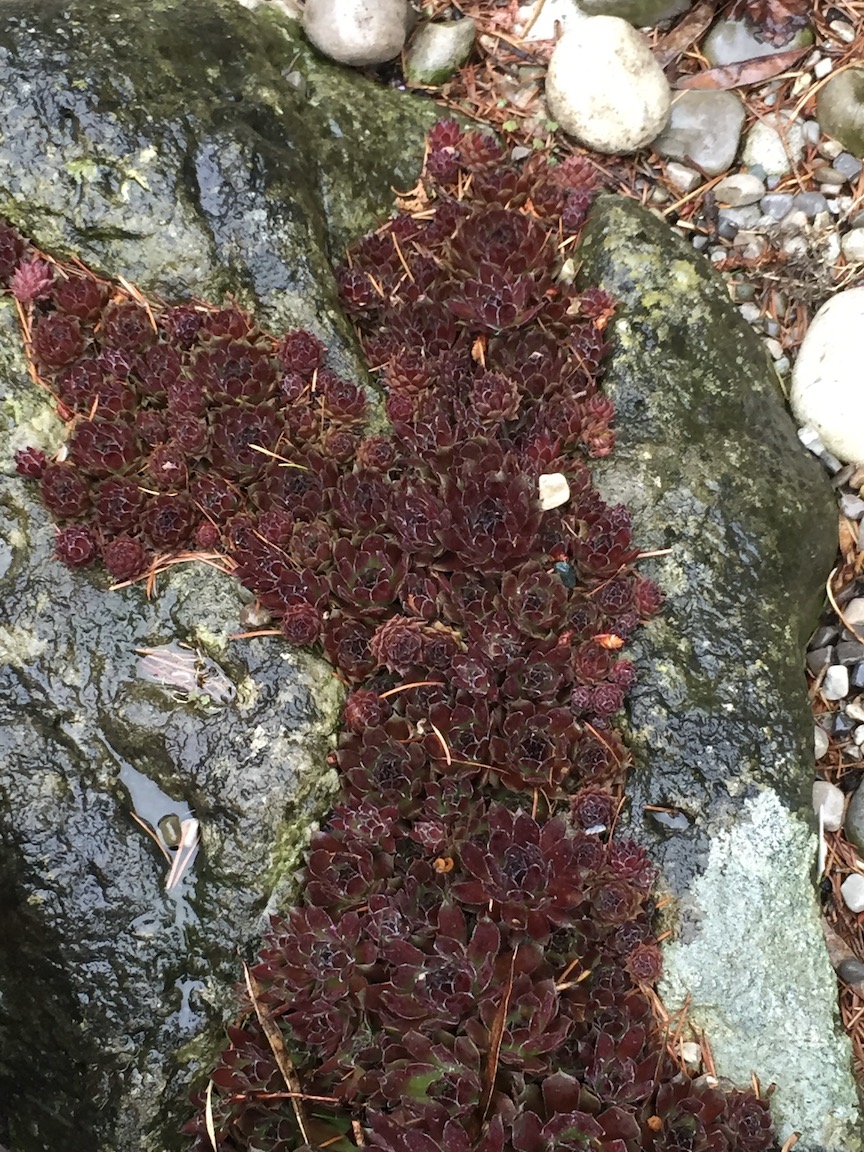
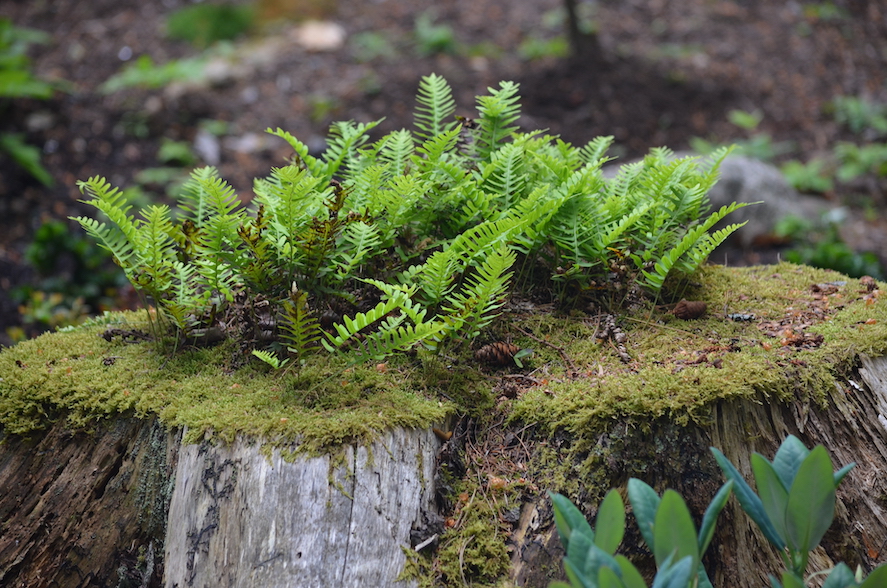
Left: Succulents planted in a rock’s crevices. Right: Ferns planted in the hollow of a tree trunk. Both photos taken in gardens in southwestern Ontario.
Of course, plants in pots or interesting containers are welcome in a woodland garden. A large container or grouping of pots can make a great feature or help to lead the eye to a special spot. (Check out the large urn-shaped container in Idea #1.) But it can be really fun to find naturally occurring ‘containers’ like crevices in rocks or a hollowed out tree stump. BTW: if you have a few tree stumps, old or new, consider hunting for some more and start a stumpery.
6. Play with pools of light

Allium seed heads catch the light in a private woodland garden north of Toronto, Ontario.
I’m always looking to find more roles for the sky to play in a garden. This is especially interesting in a woodland garden when pools of sunlight, framed by a garden’s overstorey, can make for dramatic (if fleeting), spot-lit moments. It’s in places like that where a grouping of flowers or plants with interesting seed heads or a piece of garden sculpture (Idea #7) looks amazing.
7. Accent with sculpture

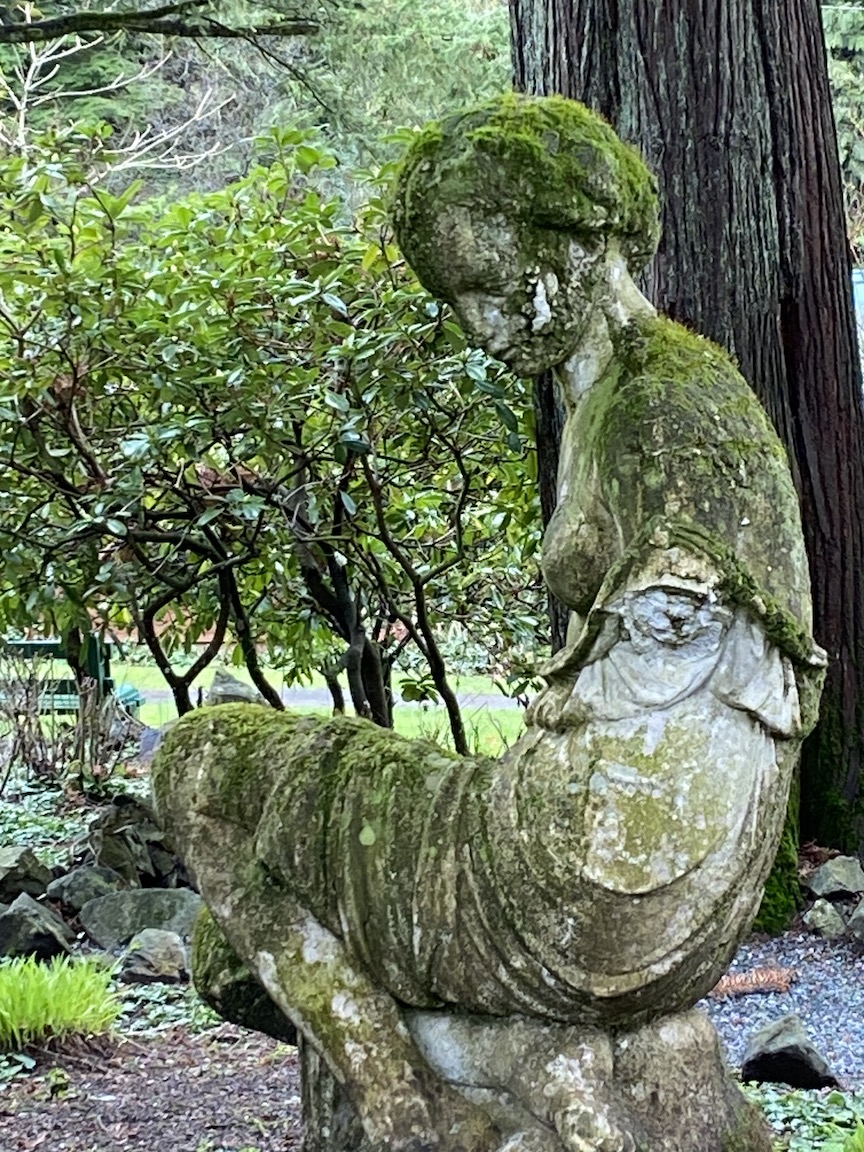
Left: Modern sculpture in a woodland garden in north Toronto. Right: A moss-covered sculpture in south coastal British Columbia.
Whether you’re into modern or classic or something in between, a piece of garden sculpture can really zhuzh up a woodland garden. Ignore any thoughts about sculpture needing a formal setting and plunk that thing anywhere you want so long as it’s got a secure and stable footing and it makes your heart sing.
8. Think big strategically

A large leaf Butterbur (background) and Ostrich fern (foreground) fill spaces with textural interest.
Woodland gardens are often filled with an overabundance of just two things: really tall trees and much smaller, really fine, small-leaved shrubs and fab ferns. So add a few, strategically placed plants that fill in the middle space. Think plants that can fill up a large volume with wide, luscious leaves like the Butterbur seen in the background in the photo above. Other large leaf plants that fall into this category include:
- Gunnera
- Super big hostas like Empress Wu or Sum and Substance
- Butterbur (Petasites japonicus)
- Ligularia dentata ‘Britt Marie Crawford’
- Umbrella plant (Darmera peltata)
Some ferns make up for their fine featheriness by growing really big. Check out native Canadian ferns such as Ostrich fern (Matteuccia struthiopteris), growing up to 5 feet high and wide or Goldie’s Fern (Dropteris goldiana) which can reach up to 4 feet in height.
9. Add some sympathetic seating


A simple log becomes bench seating (seen left and right) off to one side of a mulched path in a woodland garden in north Toronto.
With all that beauty to behold, you need a place to sit and enjoy the views. I love this very simple design masquerading as a fallen tree shown above. It’s pretty subtle in the shade shown in the left photo but I think that’s a part of why I love it so much. In an untouched forest, you might come across a real fallen tree and use it as a place to sit and ponder. This log bench offers the same and fits into the scenery just as nicely.


 Ministry of the fence