On a recent garden tour, hosted by the Toronto Botanical Gardens, I was intrigued by a property described in the tour brochure as a reverse ravine garden. Now, I’ve always assumed that ravines only went in one direction–down. But having walked into my very first reverse ravine garden (thank you, TBG!), I now know that the key is all about how you look at it.

Low stone walls create terraced garden beds on the steep slope of this reverse ravine garden in North Toronto.
Evidently, a reverse ravine garden is a fancy way of naming a garden that’s situated at the base of a ravine. The reverse part, I suppose, is in the fact that you’re looking up at the towering side of the ravine. The other fact that there isn’t an opposite side to the ravine doesn’t seem to be an issue. Call me finicky but I tend to identify ravines as kind of like mini-canyons with tall sides hugging a narrow flat bit that often has a creek. I tend to call gardens at the base of a hill or cliff just that. Reverse ravine seems to be a stretch. But here we are. I Googled reverse ravine and there are plenty of real estate sites that list properties boasting reverse ravine gardens in glowing terms.
SIDENOTE: Toronto, Canada’s largest city, just happens to have an impressive number and variety of ravines throughout the greater metropolitan area. Indeed, National Geographic claims Toronto has one of the largest ravine systems in the world, prompting names including the city within a park and the city with a sunken forest. Since many ravines run past rows of backyards you may not even know there’s one in the area. But they’re an important part of Toronto’s ecosystem, supporting a variety of wildlife including foxes, coyotes and racoons, as well as native plants.
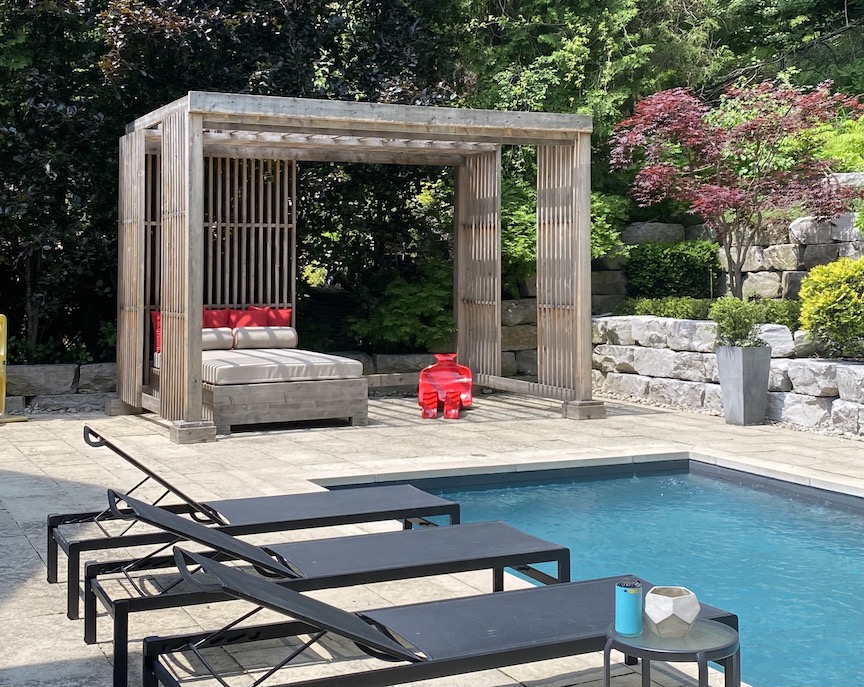
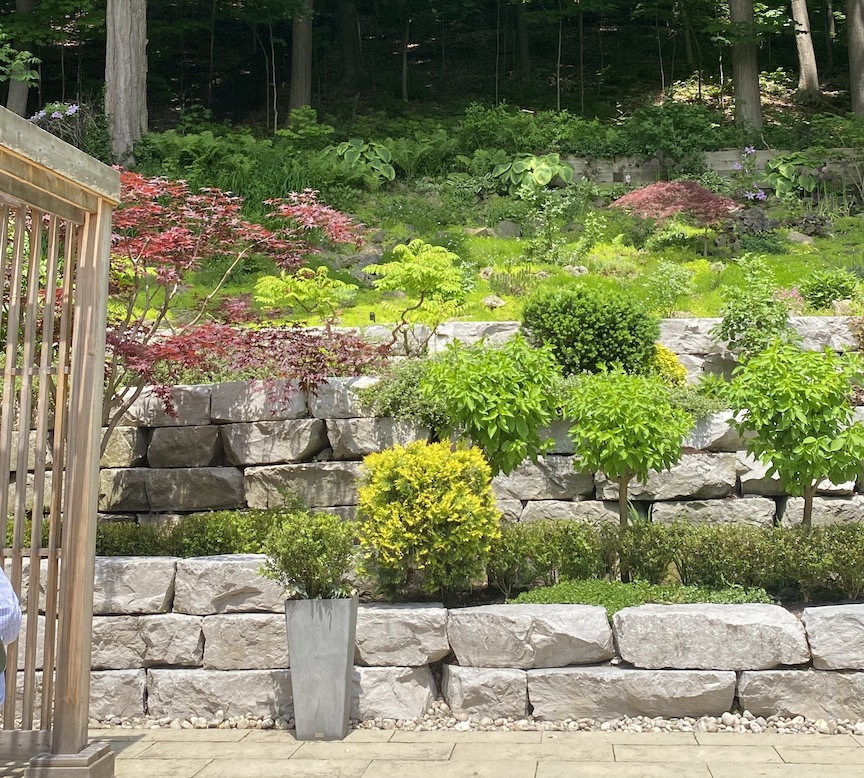
Left: A lap pool and modern pergola at the base of the garden. Right: Looking up from the patio.
Regardless of your thoughts on reverse ravine gardens, this one, seen in the three photos above, is pretty spectacular. Level with the main floor of the house is a large stone patio with built-in pool and, at one side, a gorgeous wood pergola. At the very top of the garden is a small patio with seating (barely seen in the photos). Low stone walls support narrow terraced garden beds filled with plants that play up a lushly green theme with oodles of texture including evergreen shrubs, mosses and hostas. A row of deciduous shrubs that have been pruned to be standards adds a touch of formality.
Creating a garden on any kind of an incline brings its own special challenges, erosion being top of mind, of course. But they can also be exceptional. For instance, depending on the direction the incline faces, you might have a garden that’s remarkably cool all summer long or a wonderfully warming heat capture, extending the garden season into early spring and late fall.
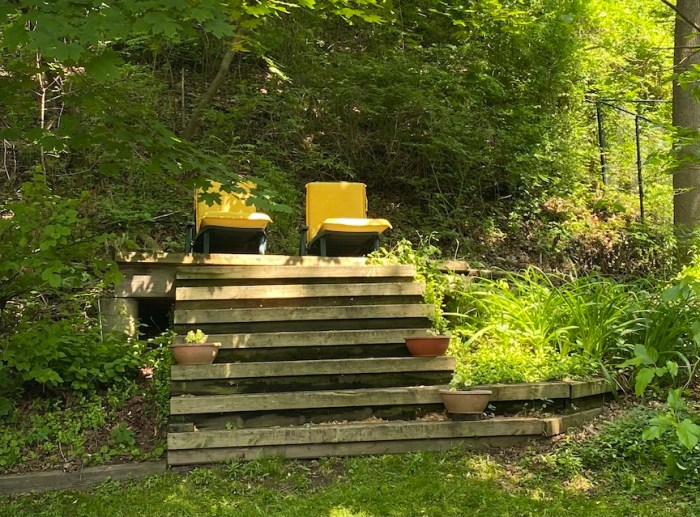
A humbler reverse ravine garden with elevated platform for quiet entertaining.
If you love the idea of having a reverse ravine garden but you don’t have much of a ravine to work with, don’t let that stop you. I love this DIY elevated platform in the photo above which was also on the garden tour. When you want an exclusive aerie from which to gaze at your world, just reverse engineer your own ravine.


 Ministry of the fence
These trends come and go. I wonder what we will have next year?
LikeLiked by 1 person
I’m almost afraid to think what might be the next trend 😄
LikeLiked by 1 person