Streptocarpus sounds like the kind of throat infection you really want to avoid but it’s the deceiving name of one of my favourite little houseplants–one that can outshine a lot of outdoors plants in the summer garden as well. And that’s not all.

My weathered Streptocarpus after a recent rainstorm in mid-July.
A relative of African violets and often going by its more appealing name of Cape primrose, this endearing plant is way tougher than its velvety leaves, slender stems and delicate blooms let on. Our Ontario summers can be brutal – sweltering days with soaring humidity, pummelling rain storms and nights that can suddenly dive down to a chilly 10C. And yet, my little Streptacarpus will bounce back again and again.
Now, if I were to tell you that on top of all this, some Streptocarpus can bloom continuously for up to 10 months a year, would you be impressed? I certainly am.
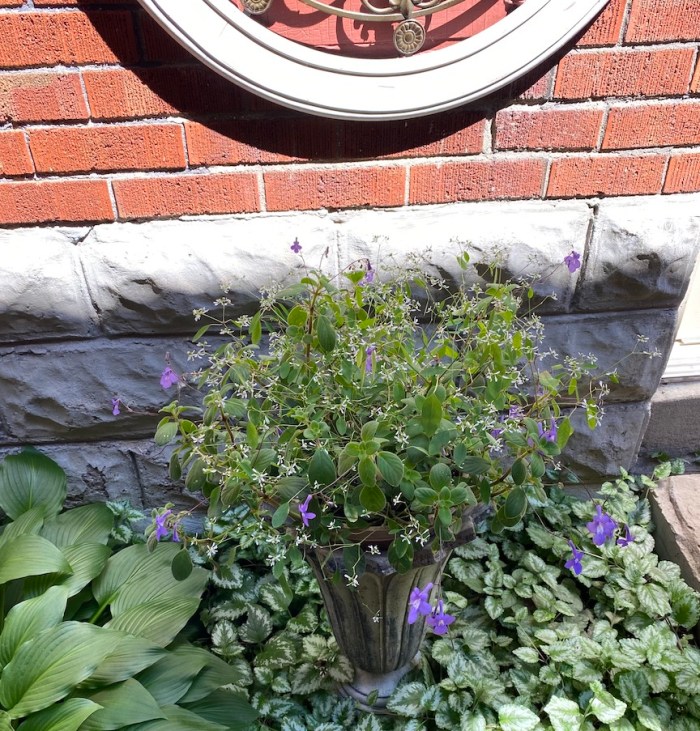
Streptocarpus with white Euphorbia ‘Diamond Frost’ in a garden featured in this summer’s Swansea garden tour hosted by the Toronto Botanical Garden.
Streps will have you charmed with their violet-shaped flowers but their small, plump, velvety leaves springing from chubby green stems come dangerously close to cuteness overload. Which makes the plant so much fun to contrast with plants sprouting thread-like stems and leaves like the combination shown immediately above.
Once you’ve caught the Streptacarpus bug, there’s no recovery. I warn you that you’ll probably want to add them to your summer container collection every year and, if you can, overwinter them on a windowsill. There are different varieties to choose from as well, so you can really get a great collection going if you’re so inclined. Check out the Ladyslippers, a group of Streps that include eye-catching bi-colours as well as ones with high contrast veining like the plant shown in the photo immediately below. Another interesting difference in Ladyslippers is their leaves which are much more primrose-like.
You can order Ladyslippers ‘Grape Ice’ through B.C.-based Phoenix Perennials.
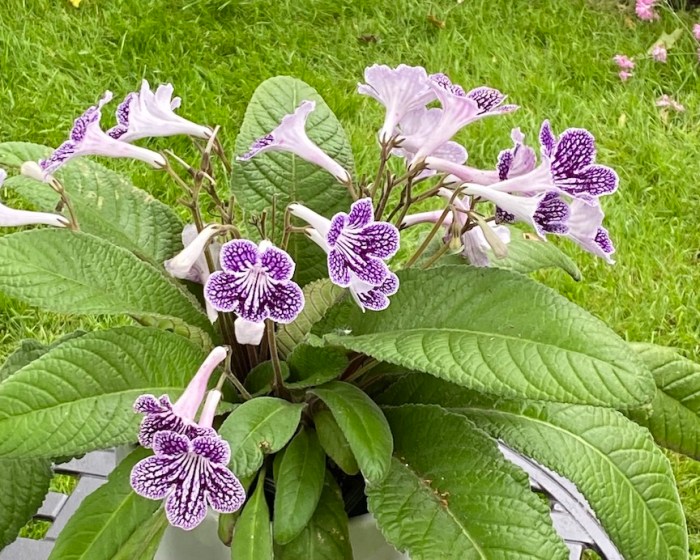
This is either Streptocarpus Polka Dot Purple or Streptocarpus Ladyslippers ‘Grape Ice’, shot during a garden tour hosted by the Toronto Botanical Gardens in June, 2024.
My fave container companion plants
Persian Shield (Strobilanthes dyeriana): I’ve been adding Streptocarpus to my container grouping on our cottage deck every summer for years now and I always add a small Persian Shield plant as a filler in the same container. I just love how the vibrant purple in its leaves echo the blooms of the Streptocarpus. You can see the pair together in the photo at the top of this post. It’s a tender perennial that can grow upwards of five feet tall in the right conditions but I simply use it as filler in my containers. It doesn’t have the time, enough light or enough heat to grow any larger than the perfect summer filler size for me.
Bird’s Foot Fern (Pteris cretica): Bird’s Foot is a wonderful fern that won’t overcrowd a Streptacarpus, staying relatively small but just tall enough to provide some fun fireworks if planted at one side of your Streps. This fern always puts a smile on my face with its weird fronds waving tiny finger-like appendages. The fronds are held aloft on wiry stems which make a nice contrast to a Streps’ stems and leaves but also oddly similar to the Streps’ bloom’s stems.
Small-leaved ivy: I don’t know the botanical name for the ivy that’s “as common as chalk” as my British mother-in-law would say. But any ivy you can find at a garden centre sporting the tiniest of leaves works really well as filler/spiller in a container with Streps. The small, pointy leaves are a great contrast, of course, and these mini varieties tend to stick to their assignment, adding a pretty trailing fringe.
Plant details
- Plant in well-draining houseplant potting soil.
- Place in bright but not direct light whether outside in summer or in a pot on a windowsill in winter.
- Do not overwater. They hate having wet feet.
- Feed ever two weeks from spring to autumn unless it’s from the ‘Crystal’Series. Use half-strength tomato food.
- Deadhead flower stalks at their base.
- Easy to propagate from leaf cuttings.
- Streps look gorgeous as a solo specimen in a pot or sharing a container with a few other plants. I understand that they can look amazing in a hanging pot because they mound so nicely and can trail a bit, although I can’t say I’ve done it or seen it in person.


 Ministry of the fence
Pingback: Good bye to the garden (for now) | Ministry of the fence