I visited my favourite fen, well, actually the only fen I know, a few days ago hoping that I wasn’t too late to spot some of the incredible wildflowers that grow there. I wasn’t disappointed. Late June/early July is actually often a better time than spring to spot gorgeous blooms including the aptly named Showy orchids. Snuggled into a harbour of sorts on the west coast of the Bruce Peninsula, the Oliphant fen is remarkable as a unique ecosystem and for its flabbergasting show of wildflowers. But before you pack your bags and race up to “The Bruce” to take in the sights, let me caution you.
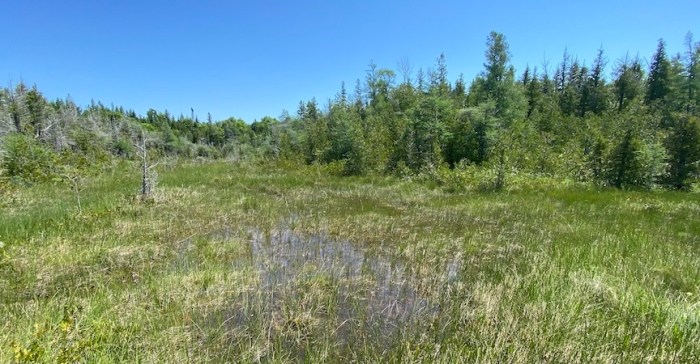
A view towards the back end of the fen, dissolving into thick evergreen bush.
I love how this fen helps me to reset my eyes, so to speak. By nature, wildflowers here tend to be smaller than the blooms I’m so used to seeing in gardens filled with ornamentals bred for giant displays. The bigger the better is often the mantra of garden nurseries when it comes to marketing flowers. Gardens have a tendency to be filled with great swaths of annuals and perennials, too, because we love to create garden beds packed with colour and texture. In the fen, wildflowers of any sort tend to be few and far between. If there is a big grouping of one type (see below), their display is so often muted by surrounding grasses. Such is the wondrous work of Mother Nature.
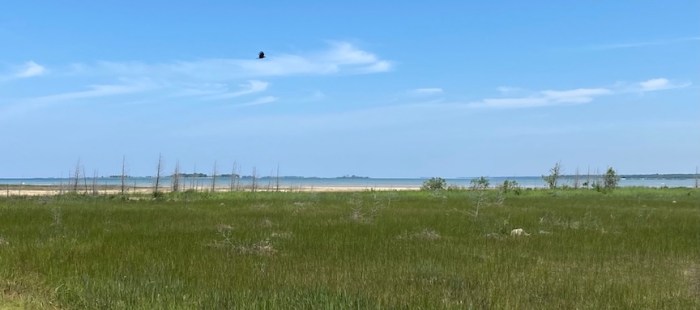
The view just past the fen of Lake Huron and the Fishing Islands, an archipelago of about 15 islands so small that some are technically called islets.
So I walk the fen very slowly–there’s a meandering boardwalk that keeps visitors elevated about a foot above the fragile (and wet) ground–while scanning the area in hopes of spying any tiny bit of colour standing out from the carpet of beige and green. I am always rewarded with sightings both new and familiar.
In the fen
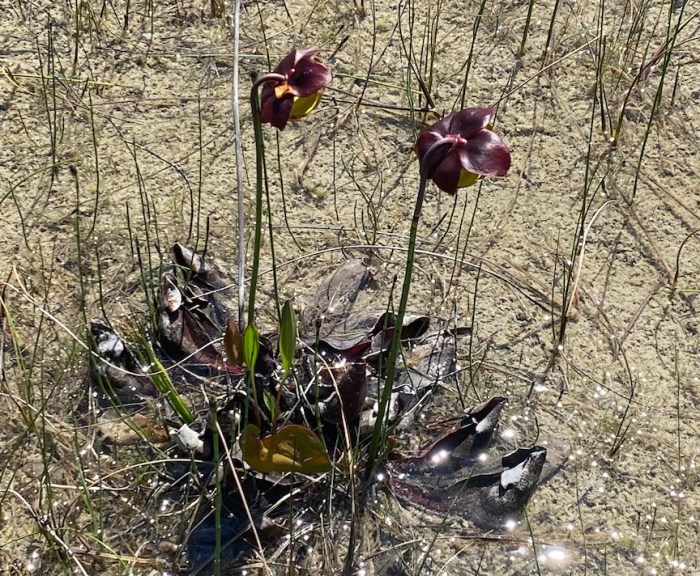
Two Purple Pitcher Plants in full bloom in the fen.
The Purple Pitcher Plants (Sarracenia purpurea) are doing their thing. I am fascinated by this wildflower, possibly the largest native carnivorous wildflower in Canada. Sundews, also carnivorous and denizens of this fen, are much smaller and, quite frankly, I’ve never found one despite searching high and low.
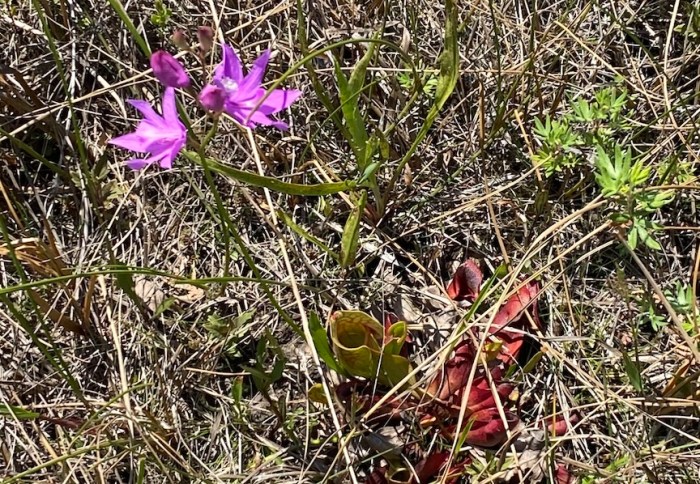
A Pitcher Plant sans bloom may be getting help attracting flies from the neighbouring Grass Pink.
Eye-searingly bright pinky-purple Grass Pinks (Calopogon tuberosus) speckled the fen, as well.
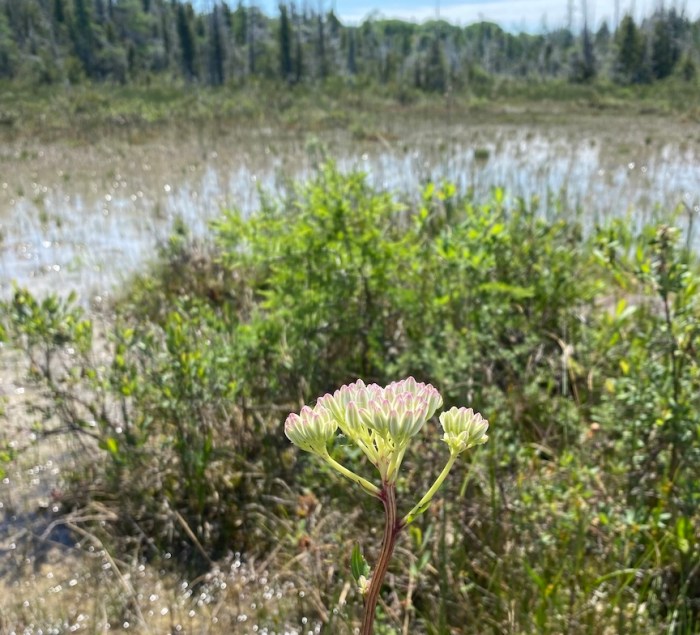
An Indian-plantain glows in the afternoon sun.
The above Tuberous Indian-plantain (Arnoglossum plantagineum) wasn’t technically flowering when I took the photo. Those pink-tinged protuberances are the bracts of the flowers. The flowers themselves are miniscule in comparison. I just love how those bracts seem to light up like tiny fairy lights when backlit by the sun.
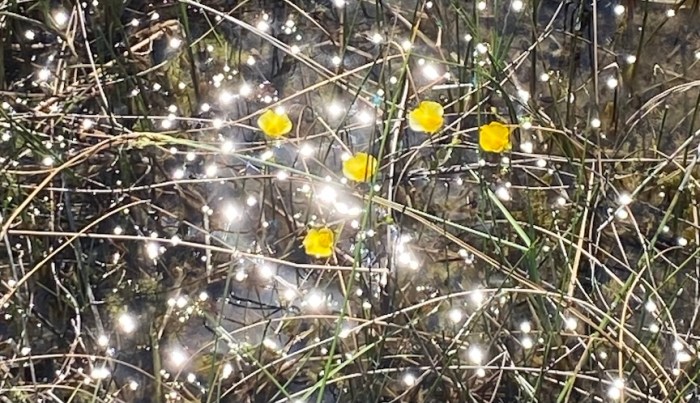
The teeny, tiny blossoms of Common Bladderwort.
The fen is often covered in a very shallow overlay of fresh water which makes the experience of discovering a wildflower quite literally dazzling. The small blooms (about the size of a thumbnail) of the unkindly named Common Bladderwort (Utricularia vulgaris) look like small suns surrounded by stars as they hover just inches above the water.
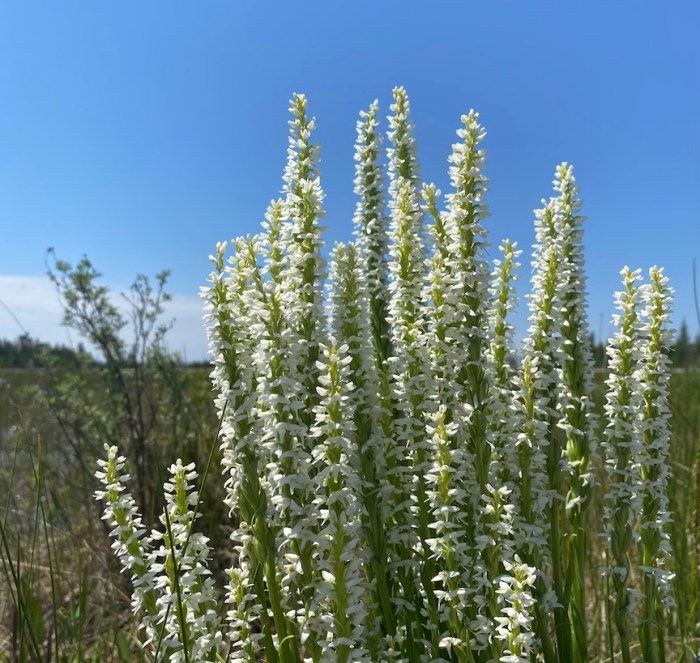
This Tall White Bog Orchid comes back reliably every year in the same spot in the fen.
I always make a point of searching out this Tall White Bog Orchid (Platanthera dilatata) which, I swear, gets larger with each passing year. The spikes on this baby stand over two feet high.
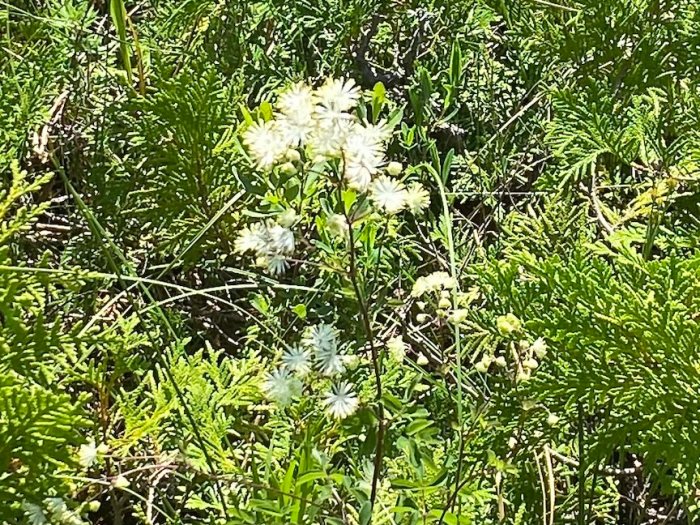
Tall Meadow-rue sways in the slightest breeze on the fen.
One of the common names for Tall Meadow-rue (Thalictrum pubescens) is King Of The Meadow and I can understand why. This one (above) was just over three feet tall but they can grow up to ten feet in height. They’re native to most of eastern Canada and the U.S.A.

Cottongrass sways in the breeze.
The best time to find a patch of Green-keeled Cottongrass (Eriophorum viridicarinatum), shown above, is when there’s a soft breeze blowing. The blooms on this plant (actually a sedge) include thread-like bristles that look for all the world like silken tassels and a breeze can set them dancing.
As you’ve already suspected, I shot all the photos in this post with my cell phone. So you’ll have to forgive the less-than-sharp focus. And some flowers I found, such as Blue Flag Iris, I couldn’t take a photo of because they were just too far away and the cell phone camera made them into pinpricks of colour. Sigh.
But surrounding the fen proper were even more wonders.
Near the fen
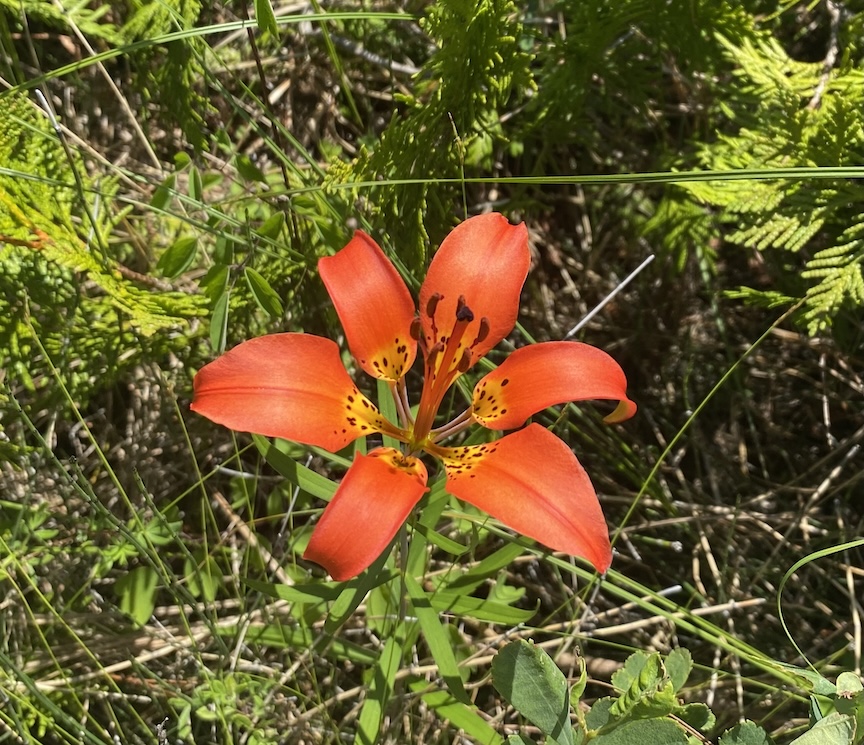
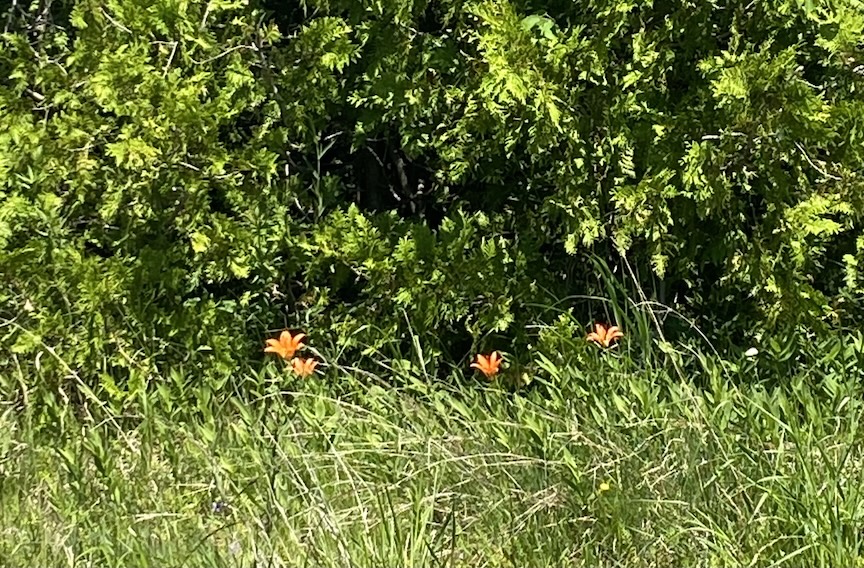
Wood Lilies popping up along the edge of a meadow just across the street from the fen.
I always thought these bright orangey-red lilies were Tiger Lilies (also known as Ditch Lilies in this part of the world because of their ubiquity). But I discovered they’re actually Wood Lilies (Lilium philadelphicum). Native to central Canada from Alberta to Quebec, this beauty used to be much more common but land development and, it’s been said, overly enthusiastic picking has reduced this eye-catcher to a rare sighting.
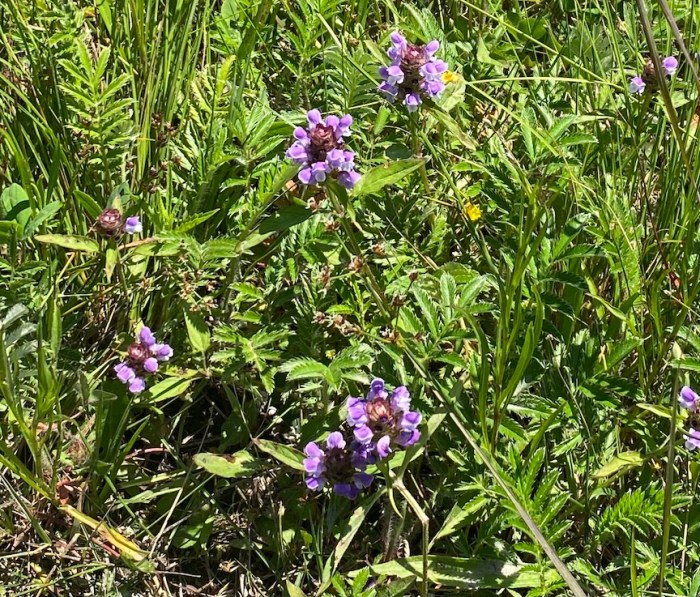
Common Selfheal sprouts spikes of tiny purple flowers in a meadow just to the side of the fen.
As its common name implies, Common Selfheal (Prunella vulgaris) is considered a herbal remedy for various ailments. It’s native to pretty much everywhere in North America except for the far north. Butterflies and bumblebees are also fans of this pretty little plant.
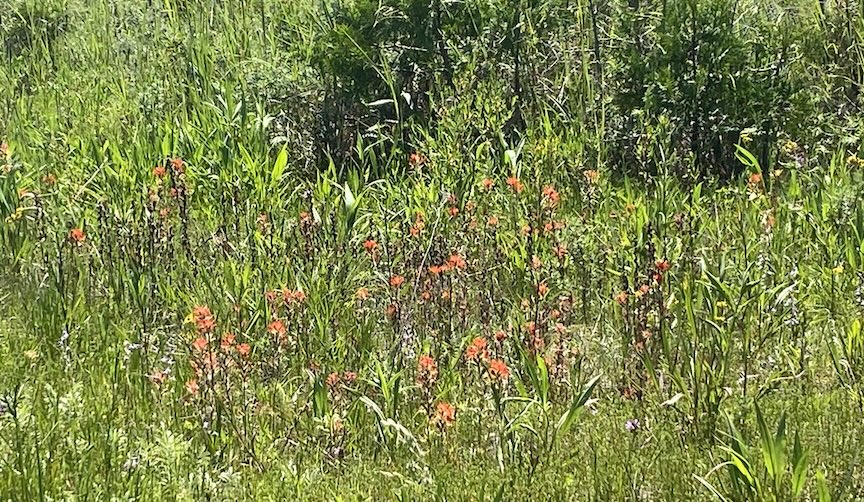
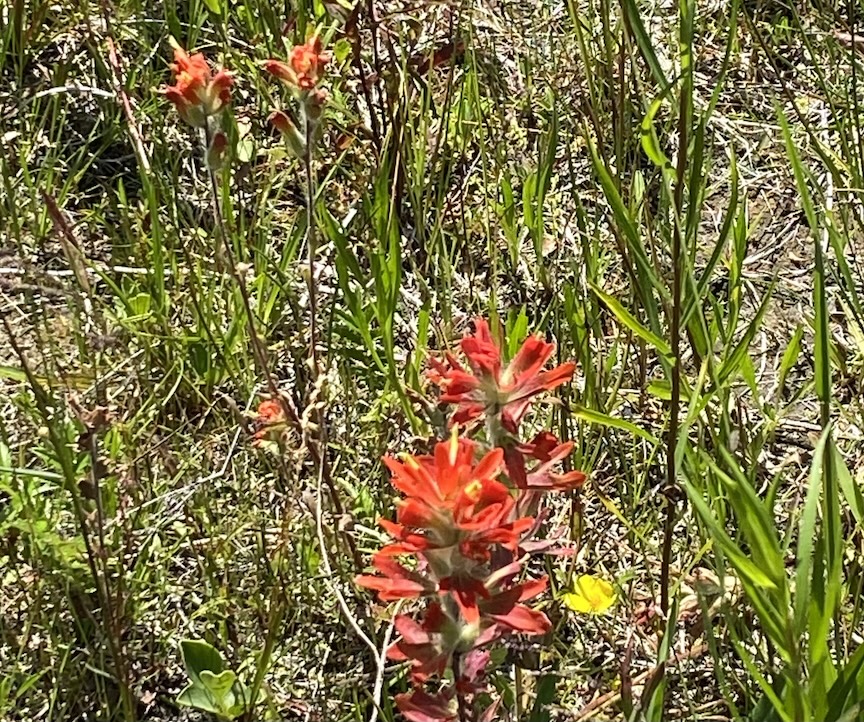
Indian Paintbrush is easy to spot with its glowing red blossoms.
This thatch of Indian Paintbrush (Castilleja coccinea) was easy to spot. These plants just glow, particularly under a high midday summer sun.
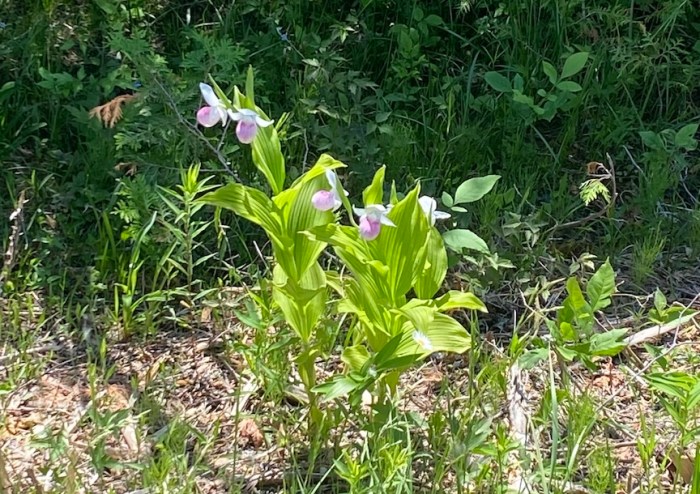
A nice surprise growing in a roadside ditch: Showy Lady’s Slippers.
Ontario has a surprising amount of native orchids. I always considered orchids to be fragile, tropical things until I moved to the Bruce Peninsula and started discovering all kinds of orchids, (large and small) growing just about everywhere–just like these Showy Lady’s Slippers (Cypripedium reginae) found in a roadside ditch. At close to two feet in height, these gorgeous showstoppers have earned their ‘showy’ title.


 Ministry of the fence