Evidently, large water features are now considered passé. According to certain gardening pundits, large water features once promised “luxury and tranquility” and were a “symbol of outdoor opulence”. This year, big splashy (sorry, not sorry) fountains and faux creeks should be considered energy guzzlers that leave an overly large carbon footprint.
I’d like to wade in here.
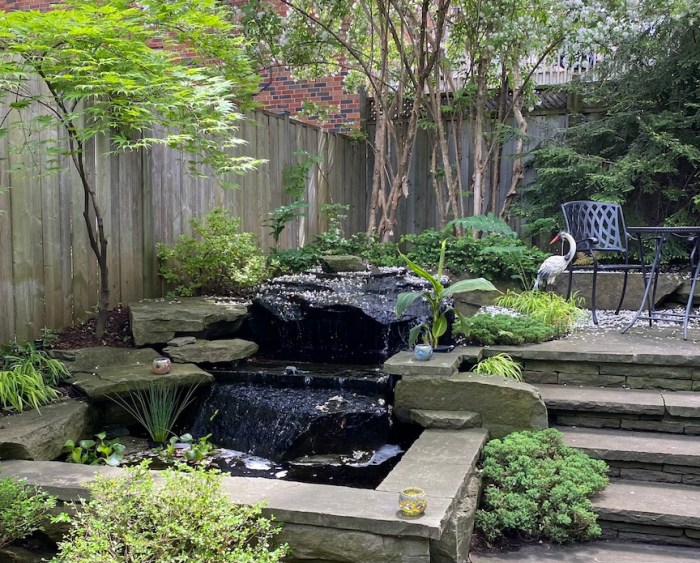
A large water feature in a small urban garden in West Toronto.
In The Garden Trends We Want to Leave Behind in 2025 it was pointed out that last year “oversized fountains, elaborate reflective pools, and dramatic water walls became a trend, creating bold focal points in many gardens” but that now it’s time to move on. Reasons listed included:
- The ongoing need for water refills and chemicals
- The energy for pumps that leads to increased utility bills
- The fact (???) that many of “these elaborate features go under-utilized, becoming more of a maintenance burden than a practical or functional addition to the garden”.
Homes & Gardens weighed in as well, suggesting gardeners avoid “big, elaborate water features” for much the same reasoning.
I beg to differ.
Go big and go better
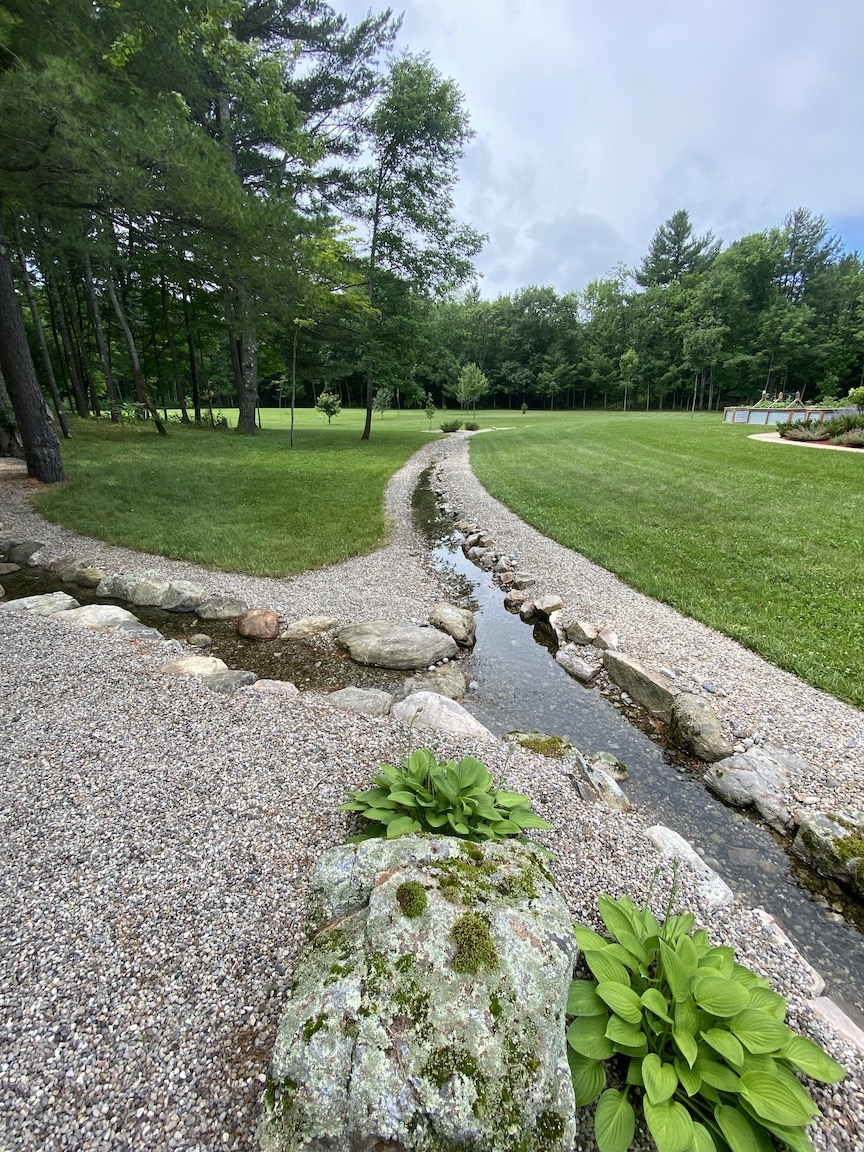
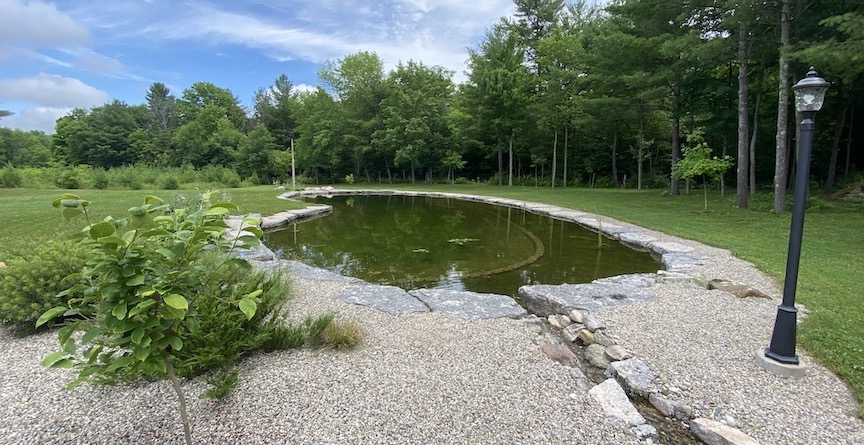
But first, here is a quick tour of a water feature that will leave you gobsmacked. The garden was featured last year on a horticultural tour outside of Gananoque, Ontario. Huge does not begin to describe this labour of love. The owner/gardener had seen the makings of a waterfall/water-feature/pond in his mind’s eye as he surveyed his rugged, rocky, sloped property and, after putting in many long hours with a back hoe, carved out this amazing creation shown in the next four photos and a video.
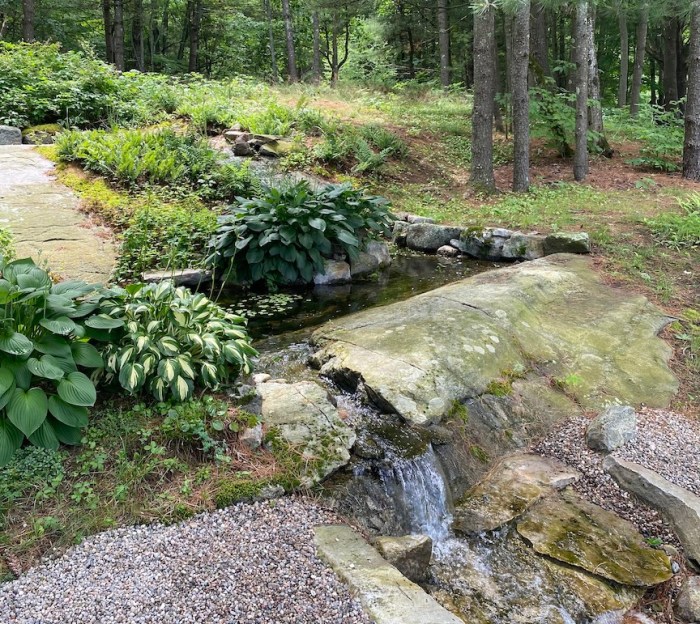
Above: Looking towards the top of the water feature. Below: the view from the top downwards towards a man-made creek that empties into a pond at far right.

Below: Two views of the long man-made creek that spans a good portion of the length of the lawn with a man-made pond at one end.
Below: A quick video showing the full length and breadth of the water feature.
A view of the water feature from the top downwards to the forking creek that empties at one end in a large pond.
I think it’s a great idea to assess your garden’s features on occasion and have a good think about whether you’re doing your best to keep things both manageable and environmentally friendly. As we all learn more about how to save energy and protect wildlife, etc., tweaks can be made. But to dismiss large water features outright seems to me a bit harsh. Besides, there are many ways you can make a really big water feature with a substantially small carbon footprint.
How to make a sustainable water feature
- Invest in innovative technology. Advanced recirculation systems can collect and filter water efficiently, reducing water use while maintaining water quality.
- Try smart controls: Programmable features can reduce water waste by, for instance, controlling water usage based on the weather.
- Look into bio-filters which can eliminate the need for chemical water clarifiers.
- Consider solar energy to power your recirculation system and lighting.
- Use natural materials rather than plastic or rubber.
- Choose drought-resistant plants that don’t need a lot of water themselves and help conserve water in your feature by casting shade over the water surface.
- Aquatic and semi-aquatic plants can also act as living water filters.
Just Google sustainable water features for more ideas and loads of paraphernalia.
Of course, down-sizing (or starting small to begin with) is an option and there are a myriad of new designs for adorable pocket-sized water features.
But if you’re spending these dreary winter months daydreaming about the crazy big water feature you’re planning to install in your garden this spring (or at least crazy big in relation to the size of your garden, patio or apartment balcony) then I say more power to you. Big ideas can also be big on making the right choices.


 Ministry of the fence