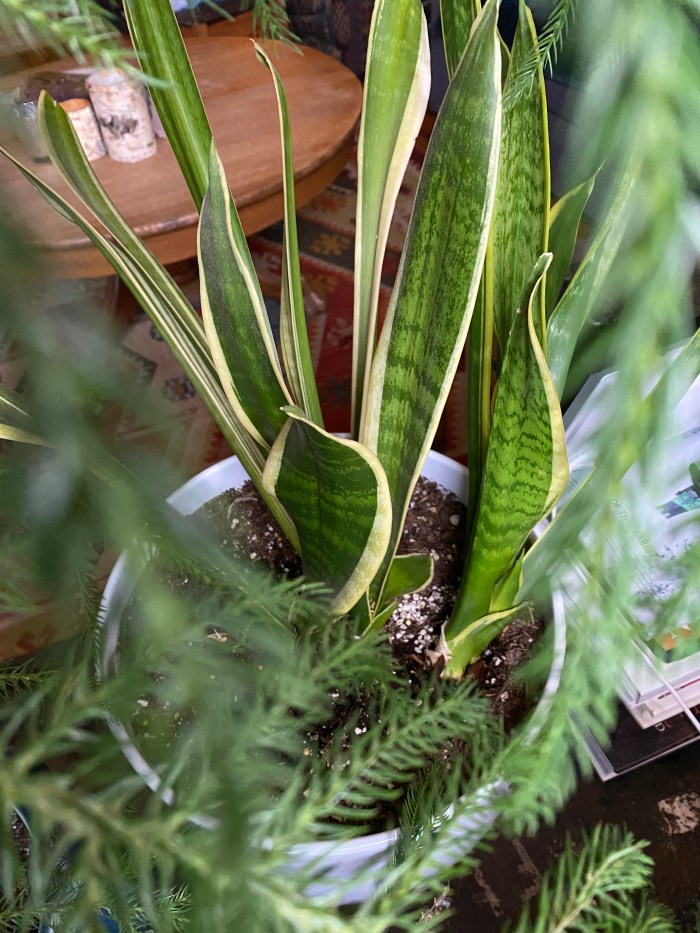
I love a good trend prediction. Declarations of this being the Year Of The ___________ just seem so optimistic and cheery to me. For instance, American online gifts and flowers delivery business 1-800-Flowers has just announced that Ranunculus is the 2025 Flower Of The Year and, bonus, Snake Plant is 2025’s Plant Of The Year. So, there you go.
Interestingly, Proven Winners, a North American garden supplier, begs to differ. They just announced a whole group of flowers and plants they’re spotlighting for 2025. Ranunculus and snake plants are not among them. Granted, Proven Winners’ plant categories deemed “Of The Year” are far more numerous than the duo offered by 1-800-Flowers. Proven Winners has a whole group of National Plant[s] Of The Year, including an Annual Of The Year, a Caladium Of The Year, a Hosta Of The Year and a Rose Of the Year. There are 11 categories all together. Plus, they offer three Recipes Of The Year. My personal favourite in the Recipes Of The Year category is called Ireland (see below) and features a heady mixture of Lantana, Bidens and Calibrachoa. You can find the recipe here.

Ireland, a hanging basket plant recipe by Proven Winner. Photo courtesy of Proven Winners.
We can guess that companies like 1-800-Flowers and Proven Winners have good reason to promote certain plants as “of the year” and that it probably has something to do with supply, demand and marketing objectives. When you want a true insight into a trend-in-the-making, Pinterest Predicts is really interesting because the predictions are based solely on trending search terms. So whatever makes their 2025 Predictions list is based on what millions of Pinterest users are aggregating, erm, ‘pinning’.
The year of gardening weirdness
Evidently, a lot of people are interested in a concept Pinterest is calling Terra Futura. It’s an umbrella term for new ways to manifest an eco-living lifestyle involving sustainable living, recyclable fashion, self-sufficient gardens and community spaces. The trending search terms for this category include “Solarpunk house” (up 80%) and Self sufficient garden (up 55%). I have to admit I have no idea what a solarpunk house would look like and, quite frankly, I can happily live the rest of my life not knowing. But here’s the potentially freaky part: the trending search term in this category that’s up a whopping 300% is “Chaos gardening”. What the dickens is chaos gardening?!?!
Chaos gardening, explained
I Googled chaos gardening. As it turns out, the concept is only new to me. News outlets, lifestyle magazines and various ‘feeds’ have been touting chaos gardening for almost a year.
According to Small Farm Canada, chaos gardening is about gardening with the least amount of effort and keeping it simple, creating “wild, natural spaces.” This involves taking a packet of seeds (flowers or vegetables or both, doesn’t matter) and “toss them into the soil”. One caveat: you need to use seeds that don’t need to be planted very deeply.
Hugely popular Canadian lifestyle brand HGTV reported that chaos gardening is all about letting Mother Nature take the lead, “forget the rules” and avoid anything structured or high maintenance. They helpfully make comparisons to:
- Cottage gardening – close but cottage gardening is still “intentionally planted” and therefore not a true chaos gardening style
- Guerilla gardening – OK, here was another what-the-heck?!?! moment for me. But, evidently, guerilla gardening is a thing and the significant difference is that guerilla gardening is essentially about casting seeds on property that’s not your own.
Even Martha Stewart has weighed in on the Chaos Gardening trend, calling it a “low-pressure, no-stress approach” that “allows you to prepare and plant a garden bed in less time than it takes to drive to the garden center.”

Chaos or carefully controlled for a ‘wild’ look? Chanticleer gardens, 2023.
Trend, maybe, but good idea?
So, I’ve just had an oh-my-goodness moment (not actually using those exact words but you get my drift). All those times I was taking packets of wildflower seeds and casting them all over the ground around our cottage on the Bruce Peninsula in Ontario I was actually “chaos gardening”! Who knew? Clearly, I didn’t. But here’s the thing: my chaos gardening efforts over the years have amounted to truly deplorable results. This has been very frustrating because I have:
- chosen seeds that are native to my particular part of the world and, supposedly, don’t need to be pushed into the ground
- scattered them carefully so as to not overcrowd the wee things
- only placed the seeds in an area that gets the right amount of sun or shade
- timed the scattering of said seeds for optimal growth in the right season
- watered the ?$%#@## things carefully and regularly to promote healthy growth
And what has happened? Nothing. Nada. Nichts. Zilch.
I did finally get some Aquilegias but only after several years of seed scattering perseverance.
After contemplating why, over the years, I have been spectacularly unsuccessful at, ahem, Chaos Gardening, I have come to some conclusions. I suspect experienced gardeners will start sagely nodding their heads as I admit that any chance at successful direct sow planting (meaning eventually getting strong, healthy plants and a multitude of them) one must:
- Prep the soil with organic matter so your seeds have good nutrition available to them.
- Prepping the soil may also mean having to break up the soil a bit especially if the area is hard packed.
- Don’t just toss handfuls of seed. Space them out to prevent competition for water and nutrients.
- You need to thin out stragglers so that the strongest seedlings have the best chance.
- Yes, you’ll have to weed.
- Yes, you’ll have to water the plants.
So there goes the whole no-stress, no-effort, just-toss-and-relax idea right out the window. Even Piet Oudolf, famed for his gorgeous wild-meadows-only-better plantings doesn’t start a planting until the area has been cleared (weed free) and forked over to loosen and aerate the soil, and then organic matter added to enrich the soil.
All of this to say that if you want a successful planting of any sort, regardless of how ‘chaotic’ it might look, you’re going to have to roll up your sleeves and do the work. Gardening is never effortless. But that’s why it’s called gardening–the ‘ing’ making it an active verb.
I hope people new to gardening don’t take up this whole chaos trend and then become disappointed later. I hope they look at different ways of gardening and try out a few to find out what works.
And for those who really need an absolutely no-effort option, I highly recommend a snake plant.


 Ministry of the fence