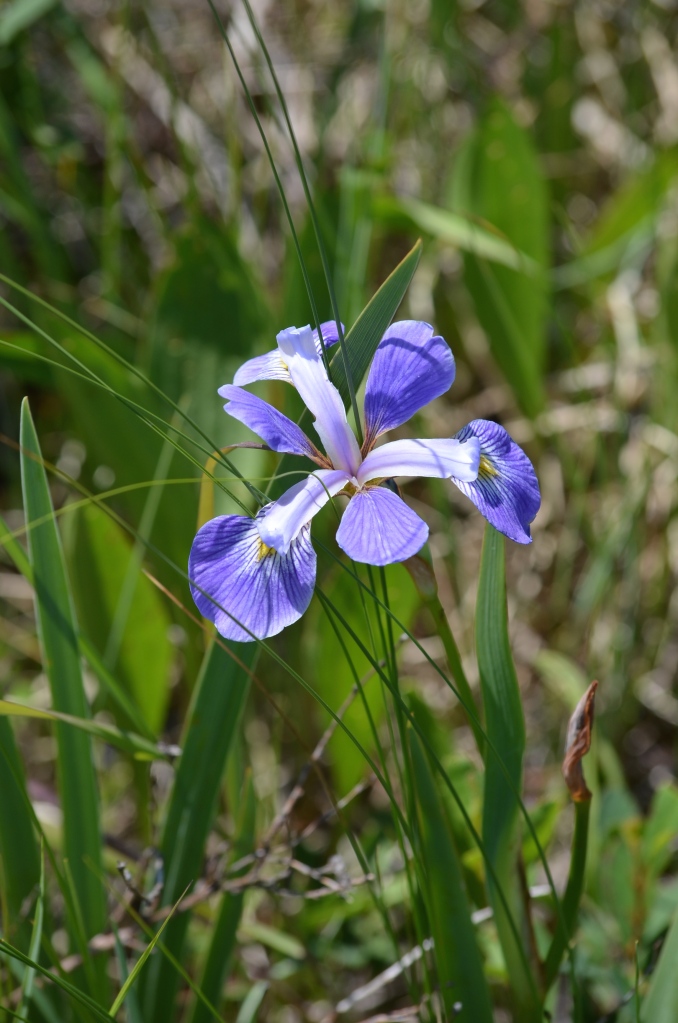
One of my favourite flowering plants native to Canada is blooming its heart out right now. The Blue Flag Iris (Iris versicolor) is a semi-aquatic rhizomatous perennial that can be found in the wild from Southern Manitoba eastward into the Atlantic provinces. It blooms from May through July adding small explosions of vivid purplish blue amidst curtains of blade-like leaves. Blue Flags bring striking texture and colour to the garden but they’re so much more than just a pretty flower.
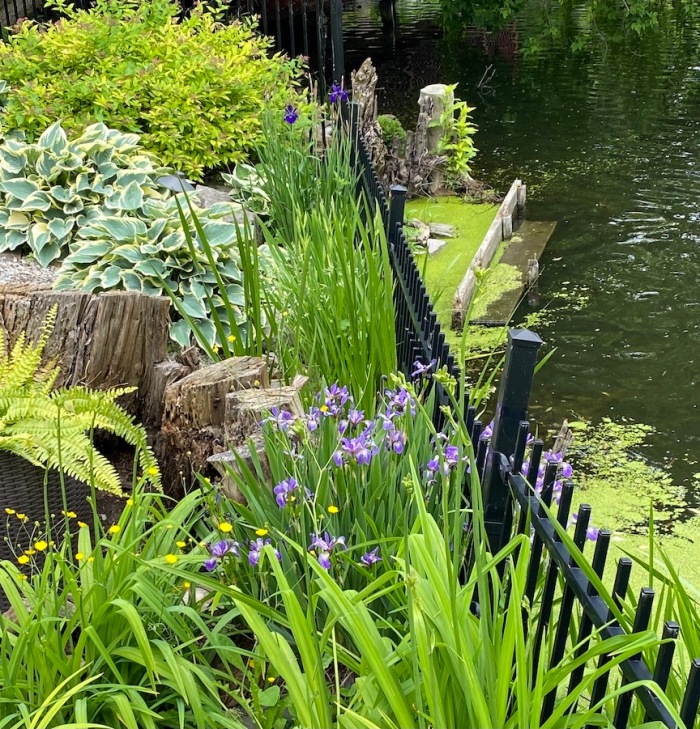
A clump of Blue Flag Irises in a garden along the edge of the Humber River in Toronto.

Blue Flag Irises love to have their feet wet so they’re great additions to any water’s edge.
Where to find them
Blue Flags love wet feet. It’ll actually grow in water up to a foot deep. So anywhere there’s a patch of sodden earth in forested wetlands, marshes or wet meadows, you may be in luck of spying some. They’re also frequent residents of shorelines. In Ontario, you’ll see patches of them popping up near lakes, rivers and ponds.
Luckily, they’re not hard to purchase. I’ve found that most larger garden centres with a sizeable native plants selection will offer Blue Flags. This may be because they are pretty easy to propagate. In fact, I buy them every spring and almost always divide the clumps from each pot into two or three parts. The thick rhizomes are easy to slice through and the plants themselves have a quick recovery period.
Planting details
- Consistently moist to wet soil.
- Full to part sun.
- Plants grow up to a metre tall.
- Divide right after flowering every two to three years to prevent overcrowding.
- They love a bit of bone meal sprinkled into the planting hole when you first plant them.
- The clumps slowly spread to form colonies.
- No need to fertilize.
- Hummingbirds love them as do bees. Several non-pollinating nectar feeding butterflies are attracted to them, too.
Where to plant
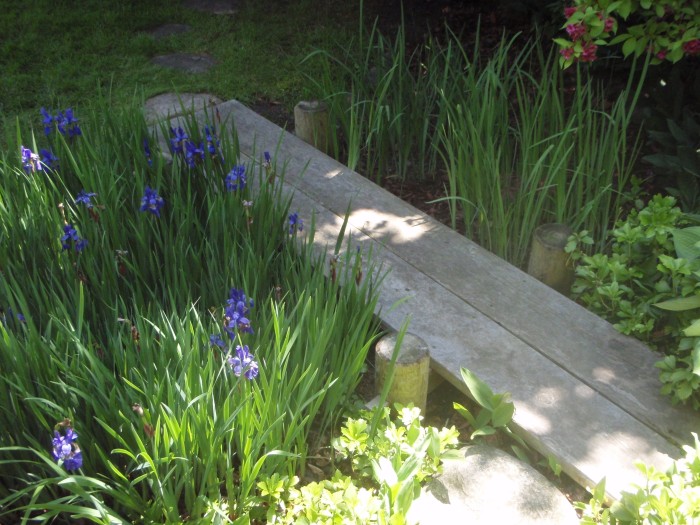
WHEREVER YOU HAVE A WET PATCH (OR CONTAINER) OF SOIL: If you have a wet patch in your garden, this is the plant for you. A bog garden, stream or pond is ideal. You could also plant them in a large container and keep them well watered just as you would with canna lilies.
WHEREVER YOU NEED TO PREVENT WET SOIL EROSION: As someone who lives half of each year at a cottage on a lake in Ontario, I plant them for beauty but also for an important purpose. The root mass of established colonies work beautifully for soil erosion and shoreline protection. With the increased boat traffic on our little lake, we knew we needed to start actively preventing erosion. If you have a pond (natural or manmade) that has an edge that needs shoring up, Blue Flags can be a big help, too.
Flag warnings
BLUE VS. YELLOW
If you’re out shopping for irises and discover Yellow Flag Iris (Iris pseudacorus), think twice before purchasing. These plants are not native to Canada. They actually come from over the pond in Europe and North Africa. They can now be found all over North America, except for the Rocky Mountains. They’re probably more prolific than the native Blue Flag because Yellow Flags can not only thrive in wetlands but they can tolerate drier soils, too, as well as soils with higher acidity. It can quickly become invasive. Gardeners living in or close to untouched countryside or on the banks of a creek or river are advised to avoid them.
LOOK BUT DON’T EAT
All parts of the Blue Flag Iris are toxic to dogs, cats, horses and other livestock. Suffice to say it ain’t good for humans, either.


 Ministry of the fence
Pingback: Fen’s mid-summer wildflowers | Ministry of the fence
Pingback: My Cup(plant) runneth over | Ministry of the fence