Primulas (aka primroses) are the poster flowers of spring with their carousels of blooms in every cheery shade imaginable swirling above rosettes of velvety green leaves. The cute, short varieties are such common spring-welcoming plants here in Canada that you’ll often find them at the grocery store (strategically positioned next to the cash registers to encourage impulse buys). With pots wrapped in brightly coloured foil and small plastic “Happy Spring” signs poked into the soil, who can walk past this spring-on-steroids display without succumbing?
Truth be told, though, despite the over-the-top adorableness of grocery store primroses, I much prefer the taller varieties. Towering above their leafy rosettes on stems from a foot to two feet or more, these leggy varieties are like exuberantly coloured exclamation points. Nothing says “Spring has sprung!” quite like these perennials.
The elegant Candelabras
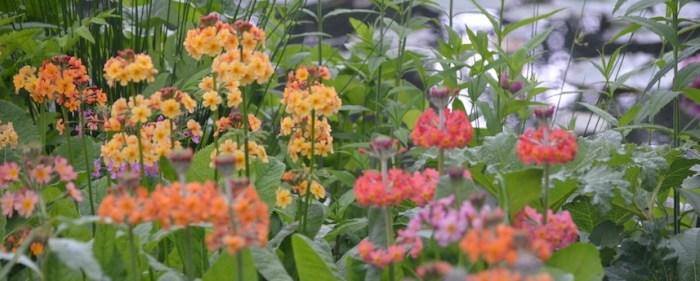
Aptly named Candelabra Primroses are one of the longest blooming, starting in early May and sprouting more tiers of blooms well into summer. They come in all kinds of colours from yellow and orange to hot pink. Japanese primula (Primula japonica) are part of the Candelabra group, offering flowers from soft pink (check out Primula japonica ‘Apple Blossom’ from Canadian mail order service Phoenix Perennials) to deep berry.
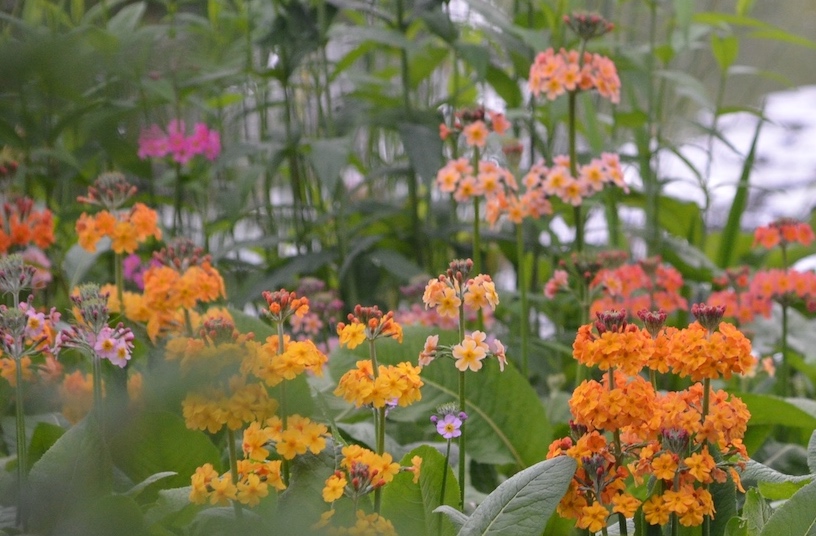

Best in light shade with consistently moist soil, they’re likes as well as looks make them perfect candidates for a woodland-style garden although any kind of cottage or country-style garden would be perfect, too, especially if there’s a conveniently placed creek or pond.
The “wild” oxlips
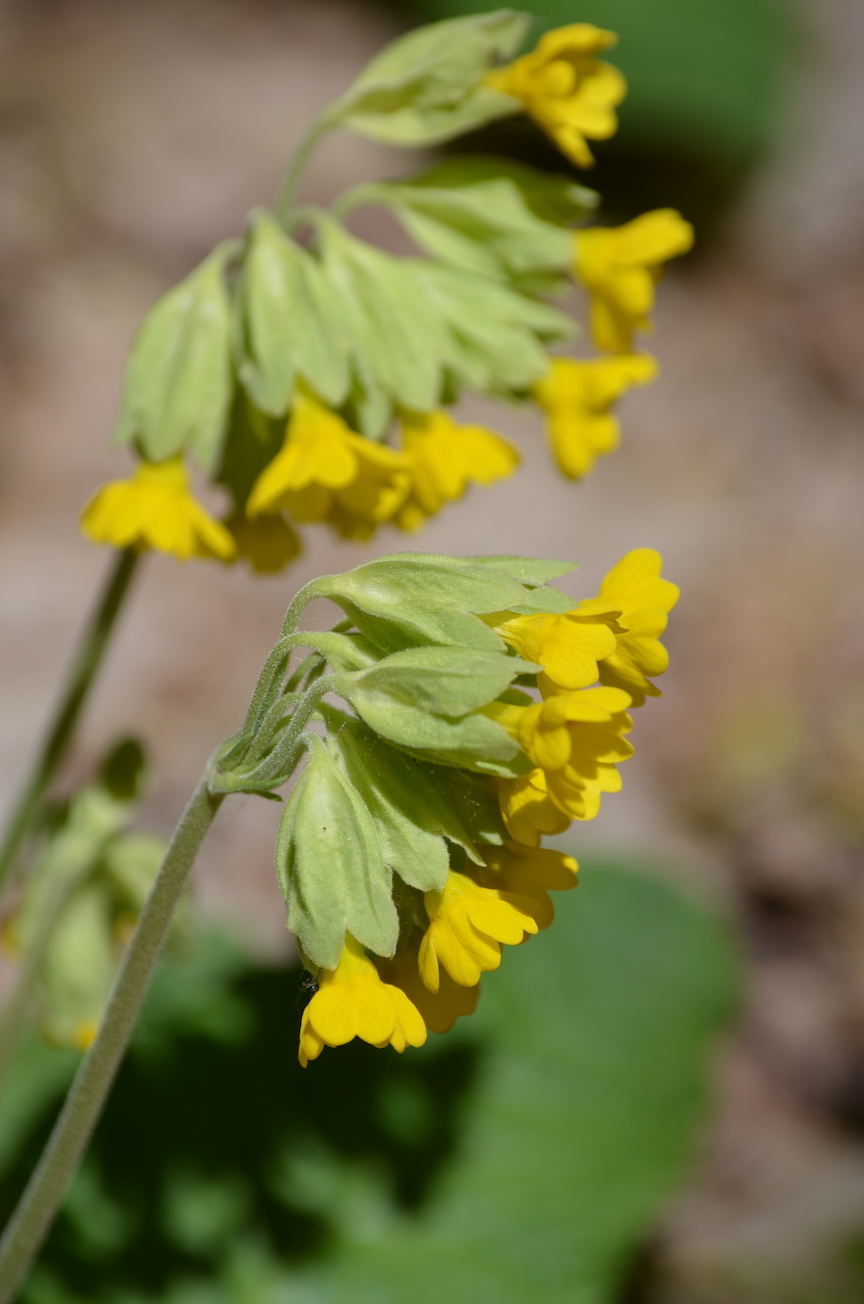
Primula elatior, also known as Oxlip, is another flower that works beautifully when planted as if in utter abandon – kind of like the swath of blooms I discovered (see below) while on a hike along the eastern rim of the Bruce Peninsula in Ontario. I was technically in a provincial park established to protect the local, native habitat so these sunny yellow beauties shouldn’t really have been there. They’re actually native to southern and central Europe and parts of southwestern Asia. How they got to a presumably all-Canadian patch of forest, I have no idea. But I can’t be mad. They’re appearance, along with (also non-native) Forget-Me-Nots was breathtaking.

Oxlips are easy to distinguish from Candelabra primulas by their endearing growth habit that sweeps all the yellow blooms at the top of each stem to one side, rather like the way Bridget Bardot tossed her hair on a breezy beach. As you can see, they thrive in part shade so, just like Candelabra primulas, they’re a terrific addition to woodland or cottage gardens or basically any part of your garden you want to look naturalized.
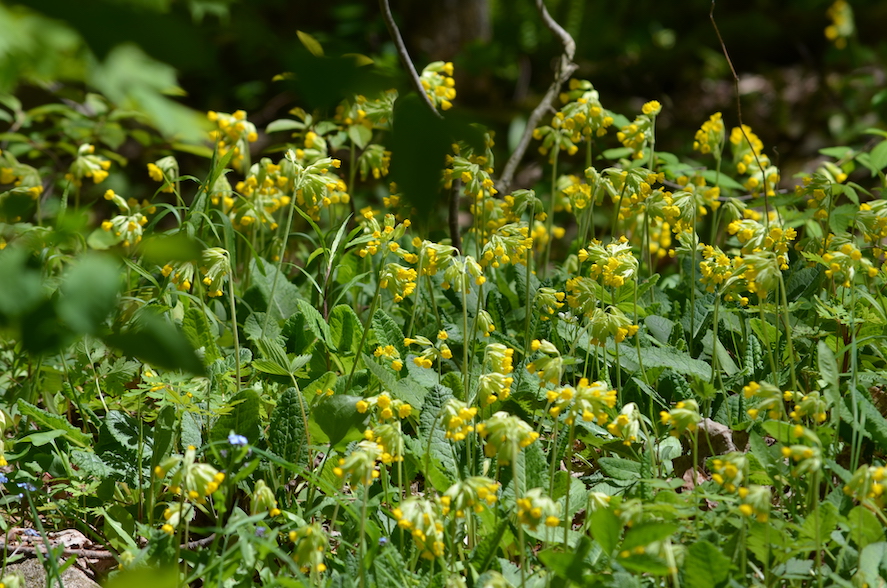
Plant oxlips in evenly moist, rich, well-draining soil and get set for a lovely spring show. SIDENOTE: Forget-me-nots just happen to thrive in sun-dappled part shade as well and moist, well-drained soil. Their tiny, clear blue blooms are the perfect contrast to oxlips, as you can see. For a woodland effect, albeit a completely un-natural combo for anywhere in Canada, you can’t get much more delightfully springtime wonderful.


 Ministry of the fence
Wonderful names – I’m currently studying metaphorical language in design – and I’d forgotten how metaphorical plant names are – thanks for the reminder! Linda x
LikeLiked by 1 person
You’re very welcome! Metaphorical language in design sounds like an awesome pursuit. I hope you’re enjoying it. Yes, plant names can be inspiring, nostalgic and even hilarious. And so often they can take you down a rabbit hole in history. It all makes gardening all the more wonderful. Thanks for your comment.
LikeLiked by 1 person
I decided to do my PhD as a 50th birthday present to myself (most mums go for diamond rings or a trip to Hawaii but I told my family I just wanted them to help me out time wise, I’d do the rest). It’s been the most (selfish yet) rewarding thing I have done for a long time. I’ll have to try to find some ‘spare time’ to go down that botanical rabbit hole. Linda x (PS – curious: what’s an example of a hilarious name?)
LikeLiked by 1 person
Selfish yet rewarding things are the best! I think we should all do more of that. For funny plant names I love Dutchman’s Breeches (Dicentra cucullaria) which really do look like white long johns on a clothesline and I have a special fondness for Sneezewort. But the top prize in my opinion goes to Begonia darthvaderiana. Seriously. That’s the official name of the plant.
LikeLiked by 1 person
OK – wow – glad I asked. Now I have so many extra things to look up this afternoon while I’m enjoying my afternoon cuppa! Thanks!! 💕
LikeLiked by 1 person