As Halloween approaches I love to indulge in some good old fashioned creepiness–the kind that only Mother Nature can provide. Natural creepiness, I find, is so much more satisfying than anything Hollywood can conjure up just because it’s happening right under your nose. In fact, I’d bet that a lot of horror movie makers get their inspirations from the worlds of plants, animals and insects.
So as pundits are predicting that Barbie, in all her bright pink, rolling skating glory, will be by far the most likely to haunt our doorsteps asking for tricks and treats come October 31st, let’s take a look at some even weirder sights, shall we?
Splattered berries

I found these berries on our property (located on the Bruce Peninsula in southwest Ontario) and instantly recognized my blood-shot eyes. Ok, I’m exaggerating. They belong to False Solomon’s Seal, Maianthemum racemosum, a native plant of Ontario that sports delicate sprays of white flowers in summer. Come late summer, though, they offer up these berries which, you’ve got to admit, are pretty creepy. Eventually the red mottling will grow to turn the entire berry completely red.
Danger stripes
I didn’t realize we had more than one type of False Solomon Seal growing wild here until these berries, shown below, started popping out.

Starry or Star-Flowered False Solomon Seal (Maianthemum stellatum) are boldly striped in fall, although, like their cousins, they’ll eventually turn completely deep red. Evidently, the stripes are indicators of the unripe seeds’ toxicity but once the berries have matured and turned solid red, they’re edible.
All round creepiness
I’m really not sure what’s creepier when it comes to White Baneberry (Actaea pachypoda), shown below: the berries or the stalks.
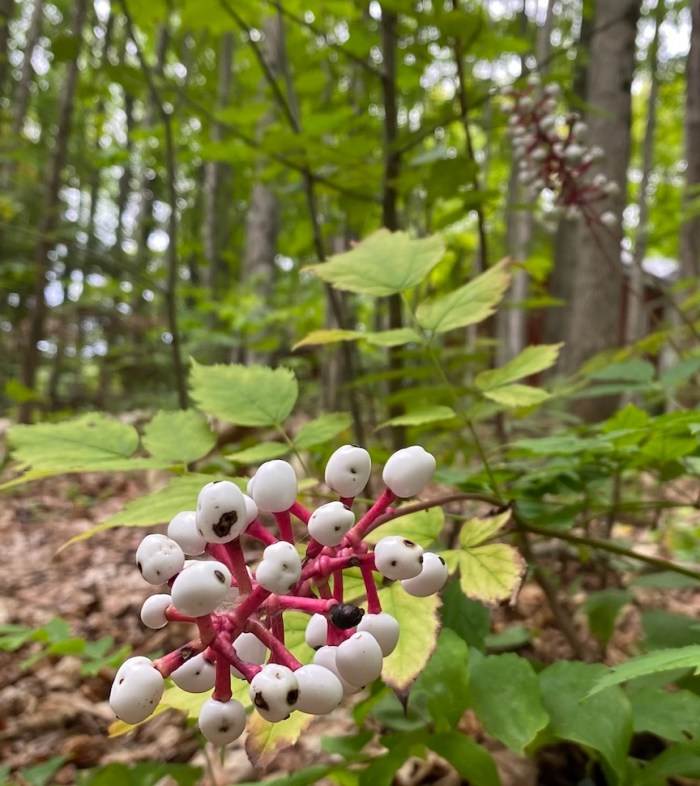
There is no messing around with this plant, native to Ontario, Quebec and parts of the Maritimes. The white berries and pudgy red/fuchsia stems just scream toxic! Basically all parts of this plant are poisonous and can render exotic symptoms if ingested that include but aren’t limited to burning of the mouth and throat, hallucinations and cardiac arrest. On an up note, birds don’t have a problem with any of this and happily consume the berries without consequence.
Dripping with menace
And then there are the fruits of the overall creepy Jack In The Pulpit (Arisaema triphyllum), shown below.
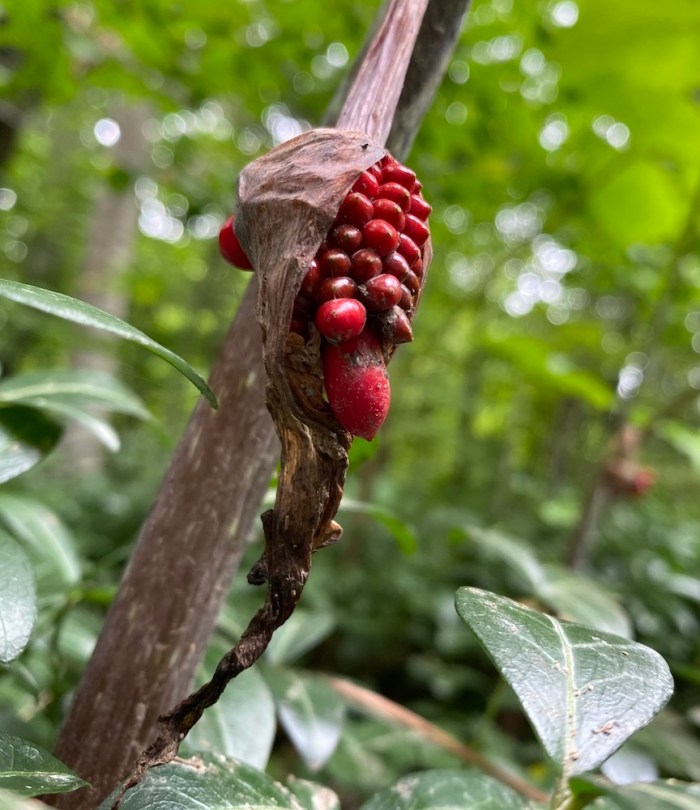
I’ve featured this wild plant in a previous Halloween-themed post about how some plants are just naturally spooky. To be honest, I think the berries are way creepier than the actual bloom. Although the flower looks like it’s tailor-made for carniverous pursuits–the hooded pitcher with “Jack” sitting oh-so-innocently inside–it’s actually luring insects for the process of reproduction, not consumption. More romance, less death and destruction. The berries, however, are like blood red niblets clustered on a cob. I guess it’s the way they hang from the otherwise next-to-dead stem that just makes my thoughts pingpong in irrational associations from propagating plant to zombie to Sigourney Weaver dodging all those aliens. Thankfully, this particular life-stage of the plant is short. The entire plant, berries and all, disappeared a couple of weeks ago.
Until next year……BWAAHAHAhahahah
Up for some more creepiness? Check out some other wonderfully frightful facts of nature in:
• Killer plants versus The Blob


 Ministry of the fence