If you caught last week’s post on Chanticleer, I hope you were left craving more. Chanticleer seemed to me to have a never-ending supply of gardening ideas. A water feature that mimics a giant sarcophagus/banquet table, evergreen mastadons and a cutting garden to rival Giverny? Oh, yeah!
The Ruin Garden
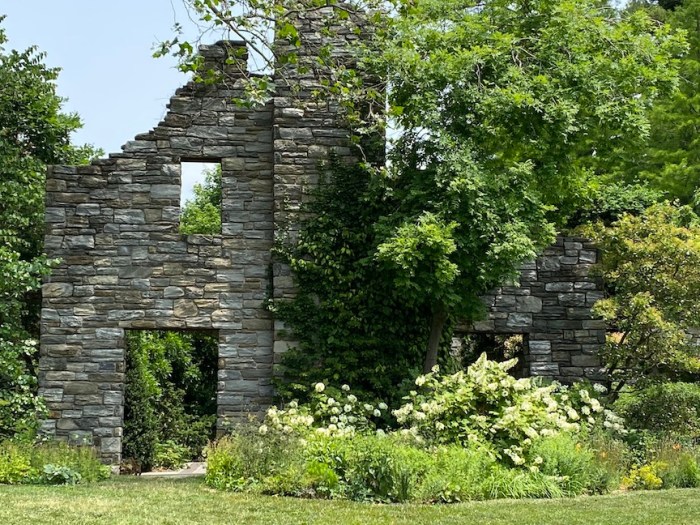
The “ruin” in the Ruin Garden is actually a folly, created from scratch on top of the foundation of a house razed in 1999. Here you’ll find a ‘Great Hall’ (shown below), complete with fireplace and mantel decorated with a variety of Tillandsia (air plants).

Directly opposite the fireplace is a giant water feature designed to look like a sarcophagus although I prefer to think of it as a banquet table (seen in full below and partially in the lower left corner of the photo above).
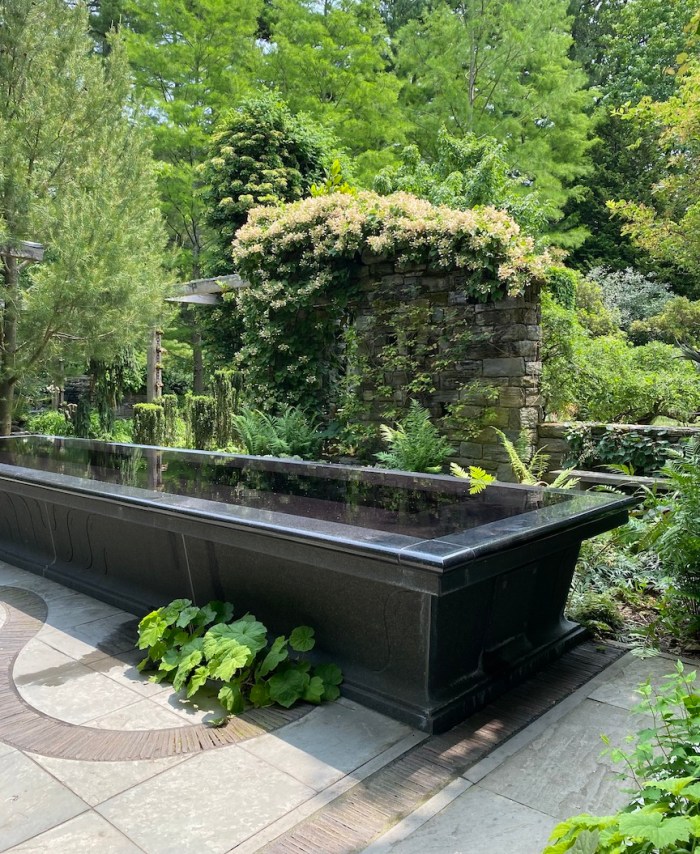
Climbing hydrangea, espaliered trees, ferns and grasses create a quiet refuge of green. The Ruin Garden is one of the few places at Chanticleer that doesn’t have a lot of colour, creating a wonderfully calming, cooling hideout from the hot summer sun.


But just as your pulse rate has begun to slow a bit, you step outside The Ruin to continue on your way and you’re met by what looks like a group of green mastadons lumbering past. These friendly giants are Picea abies ‘Pendula’, weeping cultivars of Norway spruce.


The Cutting garden
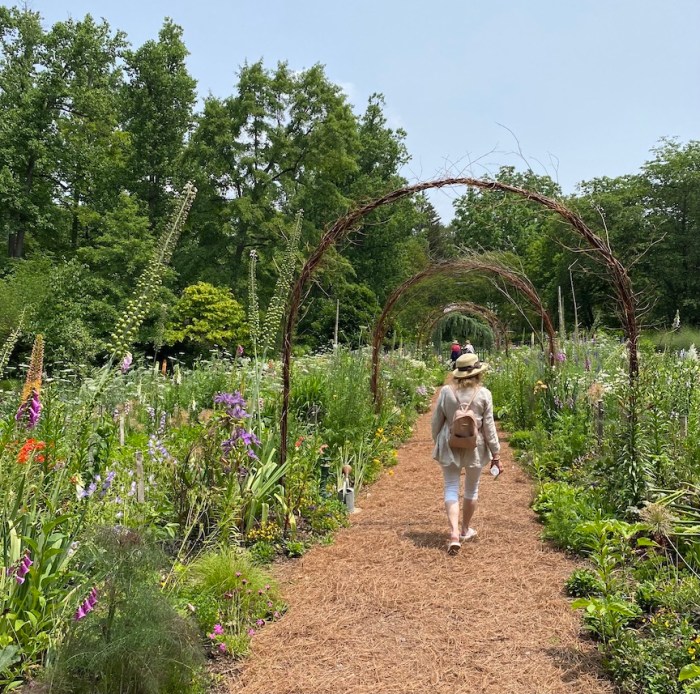
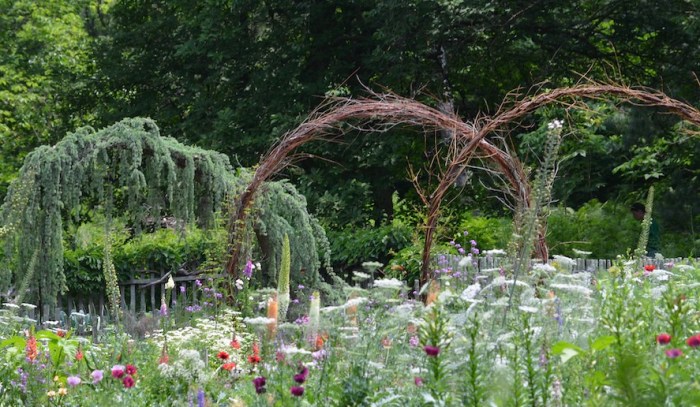
Woven branch and vine arches herald the central pathway that leads you down the middle of the cutting garden.
Adjacent to this garden is Chanticleer’s potting shed (shown below), so adorable as to bring on an overwhelming case of garden envy.


Although the Cutting Garden is a working garden, with staff harvesting stems throughout the season for use in displays throughout the property, it’s still an amazingly beautiful garden in its own right.


So much to see….
…. and so little time. My friend and I spent hours at Chanticleer and still didn’t see all the garden’s many features. Due to flagging energy and tired feet, we chose not to investigate the Creek Garden or Bell’s Woodland, the Fallen Tree Bridge or the Spitting Toad Fountain (although I’m kicking myself for not mustering a last burst of strength to take in that toad). At the end of our tour, we took a beeline through the Tennis Court Garden (seen below) rather than making a slow meander so we probably missed out on a whole other series of astonishing plantings.

But in the time we had, I was so inspired to combine plants in new ways and set them off creatively.
There were inspirations around every corner. Even a ‘corpse’ flower (named for its distinctive aroma when in bloom) is set off elegantly (shown below).


BTW: This isn’t the first time Chanticleer has successfully grown an Amorphophallus titanum. The video below shows glimpses of last year’s corpse flower in bloom as well as a lovely images of the entire garden, filmed a year ago last week.
And here’s another video showing one of this year’s corpse flowers as well as more stunning views of this incredible place, filmed this month.
VISITOR TIPS
1. Read up about the entire area before you arrive. From my recent post about Longwood Gardens, you can tell that I hadn’t known why this corner of Pennsylvania had so many amazing gardens, including Chanticleer. But I do now!
Back in the 18th century, Philadelphia was the largest town in colonial America and, likely reflecting Europe’s heated interests in botany, was also a growing hub for horticulture. But the region’s advanced interests in plants were also influenced by the Quakers, who settled in large numbers in both the town and surrounding area. The Quakers promoted the study of the natural world as a way of understanding God. Hence, the Delaware Valley was a hotspot for botanists and plantsmen. Knowing that this area was such an attraction for botanists and horticulturalists a couple hundred years ago, makes understanding the attractions today even more exciting.
SIDENOTE: If you’re an American history buff, this place won’t disappoint. As I was driving to one of the gardens on our itinerary, I passed sign after sign pointing to sites of historical interest including Valley Forge (where General George Washington camped) and the Brandywine battle (which was lost, significantly, to the British).
2. Book in advance for parking. You don’t have to book a timed entrance ticket in advance (most days), as you do at Longwood Gardens, but to park in Chanticleer’s parking lots you’ll need to book a timed parking reservation in advance. Amazingly, the parking is free. But I can understand why timed entry is required–the parking area seems pretty small. Check the website for days when timed ticket entry for yourselves is also required.
3. Wear sturdy shoes. You’re in for a great exercise session. The Chanticleer Foundation owns 50 acres, 35 of which are open to the public. Within those acres, a main path just under a mile long meanders around the garden. Thanks to thoughtful planning of pathways and lawns, which includes a raised, serpentine ramp for easy negotiating of a steep hillside, the garden is an easy walk but a long one and there are lots of moderately hilly areas.
4. Check your appetite. There are no cafes, restaurants, food trucks or any other food/drink outlet of any kind in Chanticleer. There are also no shops. So pack your camera or make sure your cell phone is fully charged for taking lots of DIY souvenir photos and a knapsack for snacks and drinks. Also, check the website regarding picnic rules. There are times when picnicking is restricted.
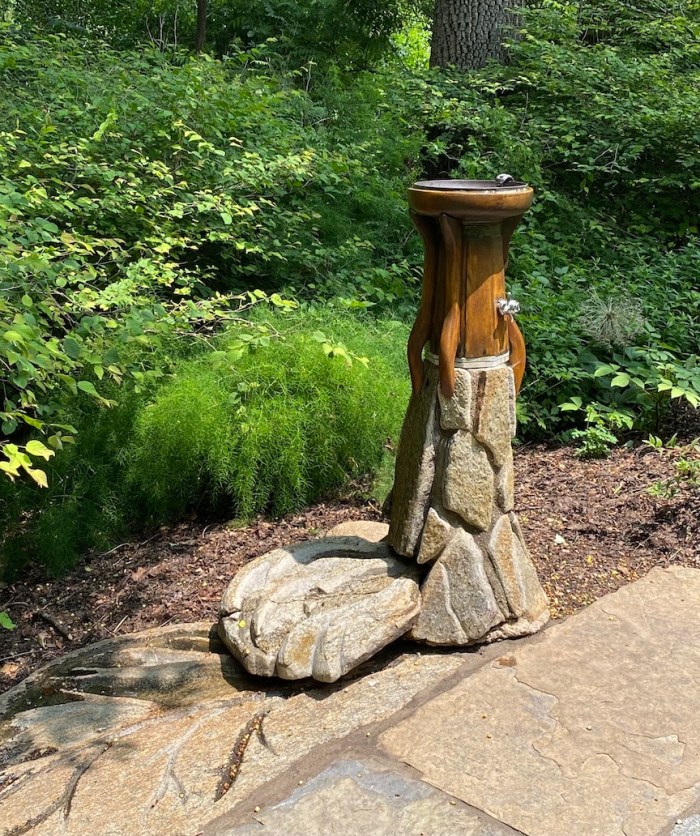
There are some water fountains, however–worth checking out because, unsurprisingly, they are as imaginative and inspiring as the rest of the garden (see below).
Have you been to Chanticleer? I’d love to hear about your experiences.


 Ministry of the fence
Pingback: 11 “Oh Wow!” vegetable garden ideas | Ministry of the fence
Pingback: A wonky, wonderful summer | Ministry of the fence
Pingback: Over the top bulb planting ideas | Ministry of the fence