Happy Canada Day! July 1st was yesterday but since we tend to spread out our traditional festivities over at least three days, I figure there’s still time to do something patriotic. Here are five fun suggestions for gardeners:
1. Brush up on your botanic identifiers
The iconic maple leaf in the centre of our national flag is a stylized version of our native sugar maple which grows from coast to coast. We know this to be 100% true because our government tells us this. However, it turns out that we might’ve gotten it wrong on various pieces of our currency.
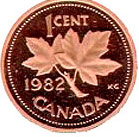
The CBC once reported back in 2017 that a tree expert believes the maple leaves depicted on the penny (shown above) as well as on the $5 bill are actually that of the Norway maple, which is not at all indigenous to Canada. Proof? Sugar maple leaves are positioned opposite each other on the stem of a tree. As you can see on the penny, above, the leaves are alternately arranged, like that of the Norway.

I’m not sure why he’s certain the leaf silhouette on the $5 bill is not a sugar maple either, but since it seems to be identical to the leaf on the $10 bill (shown above), I think we have a problem.
So in case anyone is thinking of inventing a new iconic plant symbol for Canadians to embrace, I think it would be well worth our time as gardeners to get familiar with the basics of botanic identifiers and make sure to spread the word around.
2. Plant a bunchberry shrub
We Canadians don’t have a national flower and we’re okay with that. I think that’s probably because, as a nation, we pretty much don’t care. But a few years ago, a bunch of Canadian master gardeners got together with the idea of nominating some flowers and appealing to the Canadian government. After a lot of discussion, nominations were landed upon and then a nation-wide poll was taken. Of the almost 10,000 people who voted, 80% chose the bunchberry (Cornus canadensis) as the winning plant.
What’s so amazing about bunchberry? It occurs all over Canada, has cute little white flowers and it produces berries that are an important food source for mammals from bears to hares and lots of birds. [Yawn].
Anyhoo, bunchberry has its uses. For the suburban gardener who’d like to introduce more native species into their gardens, bunchberry can be a great lawn alternative or used as a ground cover in part shade.
3. Eat a dandelion salad
Although it’s been proven (see above) that a significant portion of Canadians would be happy to have bunchberry as our national flower, I’d vote for the humble dandelion. The reasons, I think, are obvious.
- Once you open the door to dandelions it’s really hard to get rid of them. I expect most of Hollywood is saying exactly that about Canadians.
- A dandelion flower is not one single flower but a tight bunch of up to 50 small flowers arranged radially symmetric in a globe shape. Canadians are like that. We tend to get things done as a bunch, we’re pretty inclusive, and we make great team players.
- According to WeedsCanada.ca, the dandelion (Taraxacum officinale Weber) is a very effective colonizer due to a number of impressive attributes including long life span, efficient seed production and dispersal and a long tap root. Anyone who has ever sat around a pool in Florida during the winter and been suddenly overtaken by a loud group of Canadian seniors (known as snowbirds) will know exactly what I’m talking about. Canadians are renowned for invading a place, telling their buddies who then join them, and snagging all the lawn chairs while complaining about how our beer is better than the beer of whatever nation we happen to be in.
Now, as far as living with dandelions, we’re all challenged with figuring out what to do with weeds in our garden. I suggest that rather than resorting to chemicals, we simply harvest them. Dandelion leaves are great in salads and they’re very good for you as an excellent source of vitamins A, C, and K.
4. Buy that new plant from a family-owned nursery
When you buy plants from an independent, family-owned nursery, you’re not only supporting a local business, you’re reducing your carbon footprint by shopping for locally-sourced plants from Canadian growers. I get that independent nurseries aren’t easy to find, especially if you live in a large city. Check out the handy Garden Centres Canada website which has a good store locator. Also, consider ordering plants and seeds online. For instance, TheSeedCompany.ca was founded in Newfoundland in 1925 and still sells quality flower and vegetable seeds.
5. Plant a maple
Planting a tree is always a good idea but, hey, what could be more patriotic for a Canadian than planting a maple tree? Maple Leaves Forever still offers a 25% “Thank You Rebate” on eligible purchases of native maple trees. Start planning where to put your tree now, then buy your tree later this summer. You can apply for your rebate between August 15th and November 23, 2023.
And if a Norway maple catches your eye, don’t worry too much. Read all about how these trees have shaken their bad reputation for invasiveness in The niceness of newer unnatural Norway maples.


 Ministry of the fence
Pingback: 3 lush, water saving lawn alternatives | Ministry of the fence